
1769-L33ER vs 1769-L33ERM: Choosing the Right CompactLogix PLC
1769-L33ER vs 1769-L33ERM: Decoding the Motion Control Advantage
Understanding the CompactLogix 5370 L3 Family
The Allen-Bradley CompactLogix 5370 L3 series represents a cornerstone in modern industrial automation. Both the 1769-L33ER and 1769-L33ERM models offer 2MB of user memory and support up to 16 local I/O modules. They provide a scalable solution for mid-range applications. However, selecting the wrong model can lead to significant hardware limitations during system commissioning.

The Critical Significance of the M Suffix
In the Rockwell Automation ecosystem, the letter M specifically denotes Integrated Motion on EtherNet/IP. While both controllers share the same physical footprint, the L33ERM contains specialized firmware and processing capabilities. This allows the controller to synchronize servo drives using the Common Industrial Protocol (CIP). Consequently, the L33ERM serves as a true machine controller rather than a standard logic processor.
Performance Comparison: CIP Motion vs Standard Ethernet
The 1769-L33ER effectively manages discrete I/O, HMI traffic, and basic messaging. It can communicate with drives via PowerFlex instructions, but it lacks high-speed synchronization. In contrast, the 1769-L33ERM supports up to 16 axes of coordinated motion. This capability is essential for electronic camming and complex gearing. Therefore, the L33ERM ensures deterministic performance in high-speed factory automation environments.
Network Determinism and System Stability
Motion control requires strict timing to prevent axis following errors. The L33ERM handles time-sensitive motion packets with higher priority than standard network traffic. Using a standard L33ER for “pseudo-motion” via messaging often results in jitter. Our engineers at PLCDCS HUB frequently observe that dedicated motion controllers reduce troubleshooting time. Reliable data synchronization directly improves overall equipment effectiveness (OEE).
Strategic Insights from PLCDCS HUB
At PLCDCS HUB, we believe the price gap between these units is an insurance policy for future scalability. Many end-users regret choosing the standard ER model when they decide to add a single servo axis later. Replacing a controller mid-lifecycle causes unnecessary downtime and increases re-validation costs. Always evaluate your three-year expansion plan before finalizing the hardware specification.
Hardware Implementation Best Practices
- Separate motion traffic from enterprise networks using Managed Switches.
- Utilize Shielded Twisted Pair (STP) Cat5e or Cat6 cables for all drive connections.
- Verify that your Studio 5000 version supports the specific controller firmware revision.
- Implement a single-point grounding strategy to minimize electromagnetic interference (EMI).
- Enable Device Level Ring (DLR) topology for increased network resiliency.
Application Scenarios and Industry Solutions
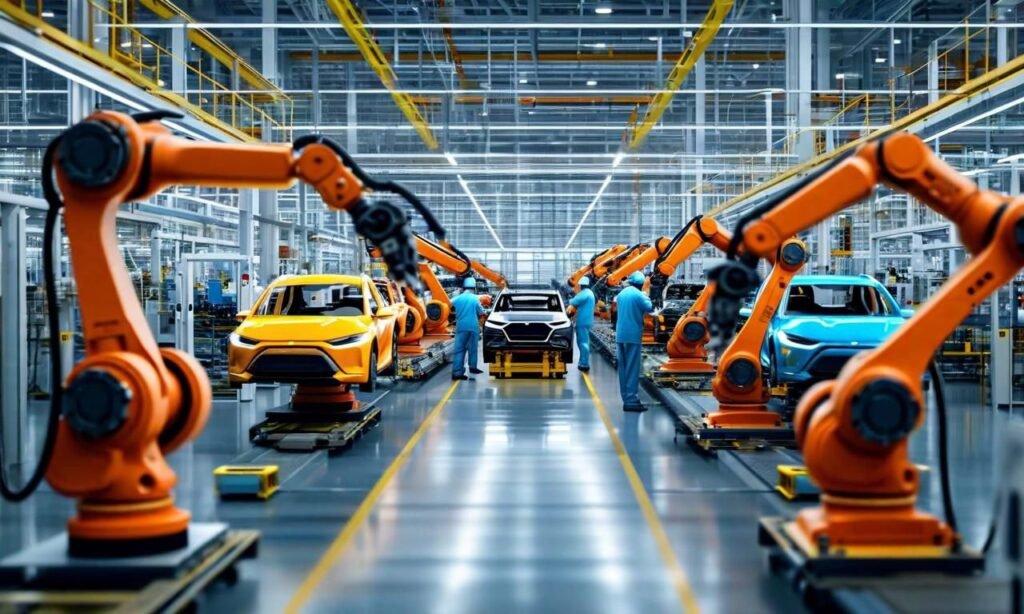
The 1769-L33ER excels in water treatment, basic conveyor systems, and process skid control. However, the 1769-L33ERM is the industry standard for packaging, labeling, and automotive assembly. If your machine requires precise positioning or multi-axis coordination, the L33ERM is mandatory. It integrates seamlessly with Kinetix 350, 5500, and 5700 servo drives for a unified engineering environment.
For more technical specifications or to procure genuine Rockwell Automation components, visit the PLCDCS HUB Limited website for expert support and competitive global shipping.
Frequently Asked Questions
Can I upgrade an L33ER to an L33ERM via a firmware flash?
No, the distinction is hardware-based at the factory level. You cannot convert a standard ER model into a Motion-capable model through software or firmware updates.
Does the L33ERM require special programming software?
Both utilize Studio 5000 Logix Designer. However, the L33ERM unlocks the “Motion Group” configuration tree. This allows you to define axis properties and coordinate systems within the project.
What is the primary risk of using the L33ER for drive control?
The main risk is the lack of synchronization. Without CIP Motion, you cannot perform precise electronic gearing. This leads to mechanical stress and poor product quality in high-speed applications.


No Comments