

1769-PA4 Power Supply Module Limit: How Many I/O Modules
Maximizing 1769-PA4 Performance: Understanding Module Limits
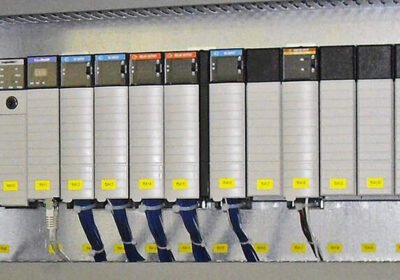
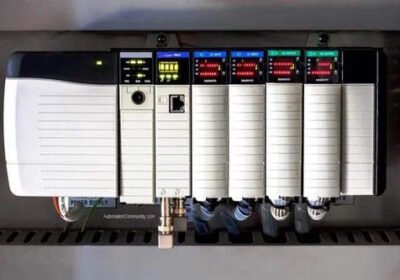
When designing a CompactLogix system, engineers often ask how many modules a 1769-PA4 can support.
The engineering conclusion is definitive: The 1769-PA4 supports a maximum of 8 local I/O modules.
Specifically, you can place 4 modules on the left and 4 on the right.
At PLCDCS HUB, we emphasize that this constraint stems from backplane architecture, not power capacity.
Understanding this rule is essential for reliable industrial automation and long-term system health.

The Strategic Value of 1769-PA4 in Control Systems
The 1769-PA4 provides stable 120/240V AC input power for factory automation islands.
It excels in OEM skids, water treatment, and pharmaceutical auxiliary systems.
The real value lies in supporting a predictable, fixed-size I/O configuration.
This architectural clarity simplifies panel design and streamlines the validation process.
Moreover, it ensures that your control systems remain cool and service-friendly within compact cabinets.
Backplane Architecture vs. Electrical Capacity
Many users assume that high current ratings allow for unlimited module expansion.
However, the 1769 Compact I/O bus imposes a strict structural limit.
The communication backplane only recognizes up to 8 local modules total.
Exceeding this limit prevents the PLC from identifying additional hardware during startup.
As a result, no software configuration can override this physical communication boundary.
Thermal Stability and Signal Integrity
Adhering to the “4-per-side” rule maintains critical thermal and electrical balances.
Concentrated I/O stacks can generate excessive heat in unventilated enclosures.
Furthermore, limiting the module count preserves backplane signal integrity during high-speed operations.
In chemical or pharmaceutical plants, this stability directly impacts long-term validation and uptime.
Following these standards ensures compliance with UL and IEC industrial control panel requirements.
Field Installation and Layout Recommendations
Proper planning before ordering hardware prevents costly rewiring during the commissioning phase.
Based on our field experience, you should finalize your I/O layout early.
Swapping module positions later often requires complete terminal block re-labeling.
If your application requires more than 8 modules, consider distributed I/O via EtherNet/IP.
This approach keeps your local rack clean and improves overall system serviceability.
- ✅ Verify the 4-left/4-right module rule before finalizing panel drawings.
- ✅ Use 1492 wiring systems to reduce cabinet clutter and heat buildup.
- ✅ Ensure the total current draw remains within the 1769-PA4 specifications.
- ✅ Never force a ninth module onto the local communication bus.
- ✅ Maintain proper vertical clearance for natural convection cooling.
- ✅ Use official Rockwell Automation configuration tools to validate power consumption.
Author Insight: Perspectives from PLCDCS HUB
At PLCDCS HUB, we believe the 1769-PA4 is a masterpiece of “right-sized” engineering.
It forces a clean design discipline that benefits maintenance teams for years.
Attempting to bypass these limits usually indicates a need for a larger DCS or PAC architecture.
We recommend keeping a spare 1769-PA4 in stock to minimize downtime during rare power surges.
Looking for reliable power solutions for your next automation project? Visit
PLCDCS HUB Limited
for authentic 1769 components and expert technical support.
Application Scenarios: Where 1769-PA4 Excels
Scenario: A small-scale municipal water pumping station requires 4 digital inputs and 2 analog outputs.
Solution: A single 1769-PA4 provides more than enough power and physical space for this configuration.
The compact footprint allows for a smaller, lower-cost outdoor enclosure.
Frequently Asked Questions (FAQ)
1. Can I use two 1769-PA4 modules to support 16 local I/O modules?
No. You cannot daisy-chain local 1769 backplanes to increase the module count.
For more than 8 modules, you must use an EtherNet/IP adapter (like the 1769-AENTR) for a second rack.
2. Does the controller count as one of the 8 modules?
The controller itself does not count toward the 8-module I/O limit.
The 8-module restriction applies specifically to the expansion I/O modules connected to the bus.
3. What happens if my total current draw exceeds the PA4 rating?
Even if you have fewer than 8 modules, exceeding the current limit causes a voltage drop.
This leads to intermittent I/O faults or complete system shutdowns.
Always calculate the total mA draw for both the 5V and 24V backplane rails.

No Comments