
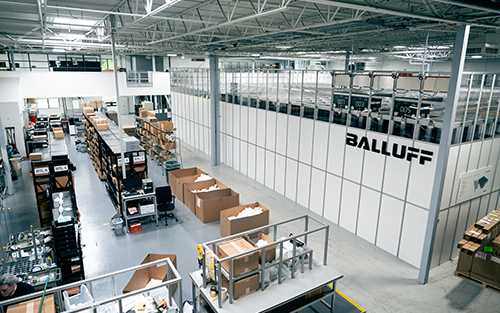
Balluff AutoStore Case Study: 177% Throughput Increase
Case Study: Balluff and Kardex Deliver AutoStore ASRS System Within Six Months
How Balluff Achieved 177% Throughput Growth with Automated Storage Systems
Transforming Warehouse Operations in Record Time
Balluff Inc. recently completed a major automation upgrade at their Kentucky facility. The company partnered with Kardex to implement an AutoStore automated storage and retrieval system. This project achieved remarkable results within a tight six-month timeline. Moreover, the implementation came in under budget while requiring no major facility modifications. The system delivered a stunning 177% increase in operational throughput.
Balluff’s Global Leadership in Industrial Automation
Balluff stands as a respected global manufacturer in the industrial automation sector. Founded in Germany in 1921, the company now operates across 68 countries. They employ over 3,600 professionals worldwide. Balluff specializes in sensor technology and identification systems. Their Florence, Kentucky facility needed enhanced inventory management capabilities. Therefore, they sought automated solutions to optimize storage and retrieval processes.
Strategic Technology Selection Process
Balluff conducted comprehensive evaluation of available automation technologies. They selected AutoStore for its alignment with their regionalization strategy. Kardex provided proven technical expertise from previous successful implementations. The companies had previously collaborated on a Balluff facility in Hungary. This established partnership ensured smooth project execution from conception through completion.
Innovative System Implementation Features
The groundbreaking AutoStore installation included several industry-first innovations:
- Cross-building installation with grid and ports separated by walls
- Space-saving seismic bracers instead of traditional columns
- Grid extension into office areas for integrated facility design
- 20,110 storage bins managed by 7 autonomous robots
- 3 CarouselPorts and 1 ConveyorPort for efficient material handling
Exceptional Project Execution Results
The Kardex team completed the project within the ambitious six-month timeframe. They achieved this while staying under the allocated budget. The implementation required minimal disruption to ongoing operations. No major facility upgrades or power infrastructure changes were necessary. According to MarketsandMarkets, the warehouse automation market continues growing at 14% annually. This makes efficient implementations increasingly valuable.
Quantifiable Operational Improvements
The new AutoStore system delivered dramatic performance enhancements:
- 177% improvement in lines processed per hour
- Elimination of previous bottleneck constraints
- Significant increase in storage density
- Scalable architecture for future expansion
- Easy addition of ports and robots as demand increases
Workforce Impact and Employee Response
Balluff’s workforce adapted quickly to the new automated system. Employees reported positive experiences with the intuitive interface. The ergonomic design improved working conditions for warehouse staff. Training requirements proved minimal due to user-friendly operation. Consequently, employee satisfaction and operational confidence increased significantly throughout the facility.
Author’s Insight: The Future of Industrial Automation
From PLCDCSHUB’s perspective, this case demonstrates several key industry trends. Successful automation projects now require faster implementation timelines. The six-month completion sets a new benchmark for similar projects. Furthermore, innovative installation approaches can overcome traditional space constraints. Companies should consider cross-functional teams when planning automation upgrades. This ensures both technical and operational requirements receive proper attention.
Key Success Factors for Automation Projects
Based on this case study, successful automation implementations share common elements:
- Clear alignment with business strategy and growth plans
- Strong partnership with experienced implementation teams
- Innovative approaches to physical space constraints
- Minimal disruption to ongoing operations during installation
- Comprehensive planning for future scalability needs
Frequently Asked Questions
What typical implementation timeline should companies expect for similar ASRS projects?
While each project varies, successful implementations typically require 6-9 months. Balluff’s six-month timeline represents industry-leading execution. Proper planning and experienced partners significantly impact project duration.
How does warehouse automation affect existing workforce requirements?
Automation often changes rather than eliminates jobs. Employees typically transition to higher-value tasks like system monitoring and exception handling. Proper training ensures smooth workforce adaptation to new technologies.
What maintenance considerations are important for automated storage systems?
Regular preventive maintenance ensures optimal system performance. Companies should plan for robotic battery replacements and mechanical component inspections. Having spare parts strategically available minimizes potential downtime.
Considering automation for your industrial operations? PLCDCSHUB provides expert guidance and components for successful automation projects. Explore our industrial automation solutions and professional services to transform your operations with proven technologies.