Danfoss China Expansion for Green Manufacturing
Danfoss Expands Global Manufacturing with Strategic China Facility
The global green technology market continues experiencing substantial growth. According to MarketsandMarkets, this sector will reach $61.9 billion by 2030. Consequently, industrial automation companies are expanding their manufacturing capabilities.
Major Manufacturing Investment in China
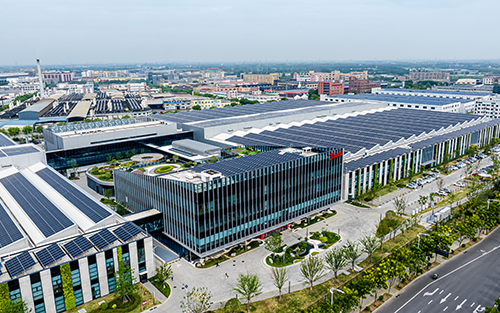
Danfoss recently inaugurated its largest global production facility in China. The Haiyan Second Campus spans 126,000 square meters. Moreover, it more than doubles the company’s regional manufacturing capacity.
This expansion integrates manufacturing for all three business segments. It also includes two Application Development Centers. These facilities meet European and American quality standards.
Strategic Importance of the Chinese Market
Kim Fausing, Danfoss CEO, emphasized China’s crucial market position. He stated the investment demonstrates commitment to China’s green future. Furthermore, it aligns with their LEAP 2030 strategic priorities.
The facility supports China’s low-carbon transition. It also strengthens partnerships with Chinese industrial customers. Therefore, it represents a long-term strategic commitment.
Diplomatic and Government Recognition
Senior officials from Denmark and China attended the inauguration. Anders Siegumfeldt represented the Danish Embassy. He highlighted the shared green ambitions between both countries.
The ceremony commemorated 75 years of diplomatic relations. It also recognized Danfoss’s contributions to bilateral partnerships. Local government officials expressed strong support for the expansion.
Technical Capabilities and Product Focus
The new campus manufactures advanced energy-efficient technologies. These products support decarbonization across multiple sectors. Key manufacturing focuses include:
- ✅ Industrial drives and motor controls
- ⚙️ Commercial compressor systems
- 🔧 Hydraulic pumps and valves
- 🤖 Heat exchanger technology
- 🔌 Quick disconnect connectors
These technologies serve building, transportation, and energy sectors. They also support industrial automation applications.
Sustainable Facility Design and Operations
The campus implements Danfoss’s three-step decarbonization approach. This includes Reduce, Reuse, and Re-source strategies. Moreover, it showcases their proven decarbonization solutions.
A 20-year green power agreement ensures sustainable operations. CGN New Energy Holding provides full renewable energy coverage. Consequently, the facility demonstrates practical carbon reduction.
Regional Economic Impact and Development
Danfoss established Haiyan operations in 2005. The campus has become a key global innovation center. It creates high-value jobs and develops local suppliers.
Arthur Xu, Danfoss China President, acknowledged local government support. He emphasized their pride in contributing to regional development. The facility represents 30 years of Chinese operations.
PLCDCSHUB Perspective: Industrial Automation Implications
From our industrial automation viewpoint, this expansion signals important trends. Danfoss drives and controls enable energy efficiency across industries. Their products integrate with modern PLC and control systems.
The facility strengthens supply chain resilience for automation components. It also supports China’s manufacturing modernization. Therefore, it benefits global industrial automation customers.
Global Manufacturing Footprint Expansion
Danfoss now operates 11 Chinese production sites. They also maintain 4 innovation facilities nationwide. The company employs over 5,000 people across China.
This expansion enhances their global manufacturing network. It also supports regional customer requirements. Additionally, it accelerates technology development cycles.
Implementation Case Studies
Industrial Drives Application: A Chinese manufacturing plant implemented Danfoss drives. They achieved 25% energy reduction in conveyor systems. The solution integrated seamlessly with existing PLC controls.
Building Automation Scenario: A commercial development used Danfoss HVAC controls. The system reduced building energy consumption by 30%. Moreover, it maintained optimal environmental conditions.
Frequently Asked Questions (FAQ)
Q: How does this expansion affect global supply chains?
A: The facility strengthens component availability for Asian markets. It also reduces delivery times for regional customers. Furthermore, it enhances supply chain diversification.
Q: What industries benefit from Danfoss products?
A: Manufacturing, building automation, energy, and transportation sectors gain significant benefits. Their technologies improve efficiency across multiple applications.
Q: How do Danfoss products integrate with automation systems?
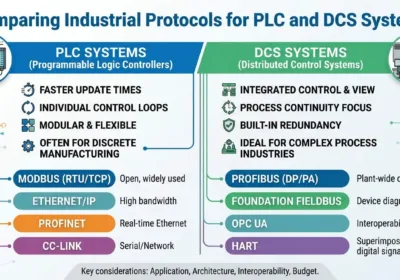
A: Their drives and controls support standard industrial protocols. They connect with PLC, DCS, and SCADA systems. This enables comprehensive automation solutions.
Discover how advanced drive and control technologies can optimize your operations. Visit PLCDCSHUB for comprehensive industrial automation resources and technical expertise.
Related Posts