Eco-Friendly Control Components for Factory Automation
Siemens and Envalior Collaborate on More Sustainable Electrical Products
Sustainable Industrial Automation: Siemens Launches Bio-Based Control Relays
Innovative Material Collaboration
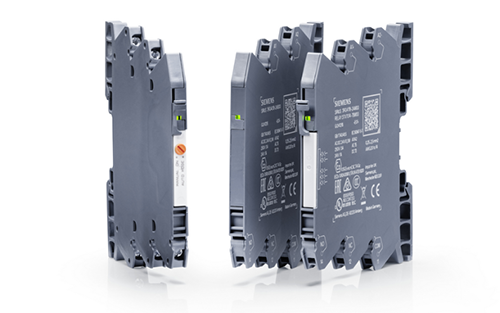
Siemens Smart Infrastructure introduces new coupling relays. These feature 70% bio-based plastic housings. Envalior developed the AkulonK225-KS B-MB material. This plastic originates from used cooking oil. Consequently, it avoids food production competition.
Sustainable Manufacturing Approach
The raw material comes from biomass waste sources. Used cooking oil transforms into engineering plastic. This process follows mass balance principles. Moreover, it prevents unnecessary incineration. The approach supports circular economy objectives.
Executive Leadership Statements
Andreas Matthé of Siemens emphasizes sustainability commitment. This collaboration advances environmentally friendly products. Furthermore, it strengthens Siemens’ green portfolio strategy. Envalior represents a strong sustainability partner.
Product Variants and Applications
SIRIUS 3RQ4 relays offer three distinct variants. The integral relay suits harsh environmental conditions. It features ATEX certification for explosive atmospheres. Additionally, it provides safety-ready characteristic values.
Plug-in and Semiconductor Options
Plug-in relays enable quick replacement during operation. They offer gold-plated contact options. Semiconductor variants provide silent, frequent switching. These have virtually infinite service life. Consequently, they reduce maintenance requirements.
Technical Performance Enhancements
Siemens increases semiconductor switching capacity significantly. It now reaches 6A performance levels. This matches conventional elementary relay capabilities. Therefore, it enables direct replacement opportunities.
Environmental Certification Standards
The products meet Siemens EcoTech label criteria. They achieve 33% lower energy losses. Furthermore, they eliminate halogen and PFAS materials. The design supports easy dismantling and recycling.
Material Science Innovation
Envalior’s Dr. Marc Rudolf highlights technical achievements. The material demonstrates excellent flow characteristics. It maintains UL94 V-0 rating at 0.4mm thickness. Moreover, it provides outstanding bio-waste content.
Industrial Automation Integration
✅ Control Cabinet Optimization
The slim-line design saves valuable space. It integrates with Siemens controllers seamlessly. This enhances factory automation efficiency.
✅ Manufacturing and Supply Chain
Automated production occurs in Amberg, Germany. This shortens European supply chains. Additionally, sustainable packaging reduces environmental impact.
⚙️ PLC System Compatibility
The relays work with industrial control systems perfectly. They support DCS and factory automation applications. Therefore, they enable sustainable automation upgrades.
Corporate Sustainability Commitments
Envalior currently uses 50% renewable electricity globally. They target 100% renewable energy by 2030. Furthermore, they plan 35% emission reductions. These goals align with global climate initiatives.
Market Context and Statistics
The global sustainable electronics market grows rapidly. MarketsandMarkets projects it reaching $170 billion by 2028. Industrial automation drives significant adoption. According to IEEE standards, bio-materials reduce carbon footprint by 40%.
PLCDCSHUB Technical Analysis
This collaboration represents industrial automation evolution. As PLCDCSHUB experts observe, sustainability becomes increasingly crucial. Traditional relays face environmental scrutiny. However, bio-based alternatives offer compelling advantages. We recommend exploring PLCDCSHUB’s control system solutions for sustainable automation projects. Our expertise ensures optimal component selection.
Implementation Considerations
Manufacturers should evaluate several key factors. First, assess current relay specifications and requirements. Second, review environmental compliance standards. Third, plan phased migration from conventional components. Proper planning ensures successful sustainability transitions.
Industry Application Scenarios
Automotive plants implement these relays for energy reduction. Food processing facilities benefit from halogen-free materials. Electronics manufacturers achieve sustainability certifications. These applications demonstrate cross-industry relevance.
Frequently Asked Questions
How do bio-based relays compare technically with conventional versions?
They offer identical electrical performance with superior environmental characteristics. Material properties meet all industrial requirements.
What industries benefit most from sustainable automation components?
Automotive, food processing, and electronics sectors achieve significant environmental compliance advantages.
How does the mass balance approach support circular economy goals?
It transforms waste materials into high-performance engineering plastics. This reduces petroleum dependency and landfill waste.
For industrial automation and control system solutions, visit PLCDCSHUB.com
Related Posts