
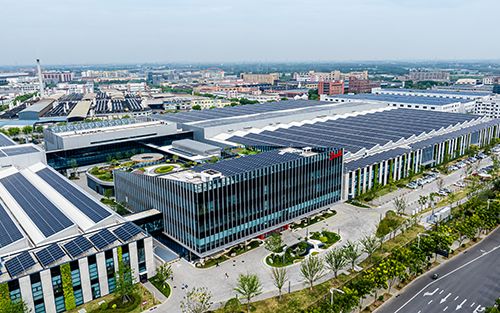
Green Manufacturing Solutions: Danfoss Opens Largest Production Facility
Danfoss Expands Global Industrial Automation Footprint with Major China Facility
Strategic Investment in Green Technology
Danish engineering leader Danfoss has launched its largest global production campus in Haiyan, China. This 126,000-square-meter facility significantly expands the company’s manufacturing capacity. Moreover, it strengthens Danfoss’s commitment to China’s green transition. The campus integrates manufacturing for all three Danfoss business segments. It also features two Application Development Centers (ADCs). These centers support Power Solutions and Climate Solutions businesses. Consequently, Danfoss enhances its local innovation and production capabilities.
Leadership Perspectives on Market Confidence
President and CEO Kim Fausing emphasized China’s crucial role in Danfoss’s global strategy. “We trust in the Chinese market,” Fausing stated during the inauguration. “This new campus demonstrates our commitment to China’s green future.” The investment aligns with Danfoss’s LEAP 2030 strategic framework. Therefore, it represents a long-term commitment to sustainable industrial automation. Senior Danish and Chinese officials attended the ceremony. They highlighted the project’s importance for bilateral cooperation and green technology advancement.
Driving Industrial Decarbonization with Proven Solutions
The new campus manufactures essential industrial automation components. These include variable frequency drives, hydraulic systems, and heat exchangers. Such technologies help reduce energy consumption across multiple sectors. According to MarketsandMarkets, the global industrial automation market will reach $306 billion by 2027. Danfoss’s expanded production capacity directly addresses this growing demand. The facility itself serves as a showcase for decarbonization technologies. It implements Danfoss’s “Reduce, Reuse, Re-source” approach throughout its operations.
Strengthening Local Partnerships and Economic Development
Danfoss China President Arthur Xu acknowledged the company’s 30-year history in China. “Our success stems from strong partnerships with local governments,” Xu noted. The Haiyan campus has become a vital innovation hub since 2005. It has created high-value jobs and developed local supply chains. Haiyan County Party Secretary Wang Suishe confirmed Danfoss’s significant contributions to regional development. This partnership model demonstrates how foreign investment can drive mutual growth in industrial automation.
Commitment to Sustainable Operations
Danfoss practices what it preaches regarding environmental responsibility. The company has committed to decarbonizing its global operations by 2030. The Haiyan campus operates under a 20-year green power purchase agreement. This ensures 100% renewable energy for all local facilities. Additionally, the campus implements numerous energy efficiency measures. These practical applications of Danfoss technologies provide customers with proven decarbonization roadmaps.
Practical Applications in Industrial Automation
✅ Energy-Efficient Drives: Danfoss drives optimize motor speed in pumping and ventilation systems, typically reducing energy consumption by 20-50%.
⚙️ Hydraulic Solutions: The campus produces advanced hydraulic pumps and valves essential for precision control in heavy machinery and mobile equipment.
🔧 Heat Exchange Technology: Danfoss heat exchangers enable waste heat recovery in industrial processes, improving overall system efficiency.
For professionals seeking reliable control systems components, PLCDCSHUB Limited offers comprehensive solutions matching Danfoss’s quality standards. Our product range supports various industrial automation applications.
Industry Outlook and Author Perspective
The Danfoss expansion reflects broader trends in industrial automation. PLCDCSHUB analysis indicates growing demand for integrated energy-efficient solutions. China’s manufacturing sector increasingly adopts smart technologies to meet dual carbon goals. Danfoss’s strategic positioning demonstrates how global companies can successfully navigate this transition. However, successful implementation requires robust control systems and proper integration. Companies should consider both component quality and system compatibility when planning automation upgrades.
Frequently Asked Questions
How does Danfoss’s expansion affect the industrial automation component supply chain?
The increased production capacity helps stabilize component availability for drives, hydraulic systems, and heat exchangers. This benefits equipment manufacturers facing supply chain constraints.
What makes the Haiyan facility significant for control systems integration?
The co-located Application Development Centers enable faster customization of power and climate solutions. This reduces implementation time for complex automation projects.
How does Danfoss’s decarbonization approach benefit industrial customers?
The “Reduce, Reuse, Re-source” methodology provides a practical framework for implementing energy-efficient technologies. This helps customers achieve sustainability targets while maintaining operational efficiency.
Conclusion: Strategic Positioning for Sustainable Growth
Danfoss’s substantial investment in China demonstrates confidence in the region’s manufacturing future. The Haiyan campus strengthens the company’s ability to serve growing demand for green technologies. Furthermore, it showcases practical decarbonization strategies applicable across industrial sectors. As companies worldwide pursue sustainability goals, such integrated approaches become increasingly valuable. For reliable automation components supporting these initiatives, explore the certified products available at PLCDCSHUB Limited.
Related Posts


