Hazardous Area Control Interfaces for Industrial Automation Systems
Essential Hazardous Area Control Interfaces for Modern Industrial Systems
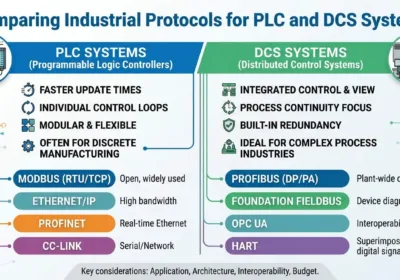
Modern factories require specialized equipment for Zone 0 and Zone 1 hazardous areas. These interfaces connect field instruments to control systems like PLCs and DCS. They ensure operational safety in potentially explosive atmospheres.
Critical Functions of Control Interfaces
Industrial control interfaces perform several vital functions. They provide electrical isolation between safe and hazardous areas. Additionally, they convert and condition signals from field devices. These components also protect control systems from transient surges.
Key technical capabilities include:
- ✅ Intrinsic safety protection
- ✅ Signal conversion and conditioning
- ✅ Electrical isolation barriers
- ✅ HART communication support
- ✅ Fast response times
MTL3021 Control Interface Features and Applications
The MTL3021 provides reliable hazardous area control. This interface module offers robust protection for control circuits. It features compact design for high-density installations.
Typical applications include:
- ⚙️ Emergency shutdown systems
- ⚙️ Motor control circuits
- ⚙️ Solenoid valve interfaces
- ⚙️ Alarm and indication circuits
MTL3013 Dual Channel Interface Capabilities
The MTL3013 delivers dual-channel functionality for Zone 0 areas. This interface saves panel space while maintaining safety standards. Moreover, it provides independent channels for multiple field devices.
PLCDCSHUB notes: “The MTL3013’s dual-channel design significantly reduces installation costs. It effectively halves the space requirement compared to single-channel units.”
Advanced Signal Processing with MTL4546Y
The MTL4546Y specializes in HART communication isolation. This smart signal interface maintains digital communication while providing safety isolation. Therefore, it enables advanced device diagnostics and configuration.
Control and Safety Override with MTL4524
The MTL4524 offers unique safety override capabilities. This hazardous area controller includes manual override functions for maintenance. It complies with IEC 61508 safety standards for critical applications.
High-Speed Signal Conditioning with MTL4581
The MTL4581 provides exceptional 150μs response time for millivolt signals. This high-speed signal conditioner handles fast-changing process variables effectively. As a result, it suits applications requiring rapid control response.
Selection Guidelines for Different Applications
Choosing the right interface requires careful consideration. First, assess the hazardous area classification (Zone 0, 1, or 2). Next, determine the required signal type and communication protocol. Finally, consider response time requirements and space constraints.
Selection criteria include:
- 🔧 Hazardous area certification
- 🔧 Number of channels needed
- 🔧 Communication protocol support
- 🔧 Response time specifications
- 🔧 Physical dimensions
Practical Application Scenarios
Different industrial applications demand specific interface solutions:
Oil and Gas Processing: MTL3013 interfaces handle Zone 0 area instrumentation for gas detection systems.
Pharmaceutical Manufacturing: MTL4546Y maintains HART communication with smart transmitters in classified areas.
Chemical Processing: MTL4524 provides safety override for emergency shutdown systems in reactor control.
Power Generation: MTL4581 conditions thermocouple signals for fast-response temperature control.
Industry Trends and Future Developments
Industrial interfaces continue evolving toward digital integration. The IEEE 2668.1 standard now addresses IIoT device interoperability. Furthermore, Industry 4.0 drives demand for smarter interface components with diagnostic capabilities.
PLCDCSHUB observes: “We see increasing demand for interfaces supporting both safety and smart communication. Modern plants want diagnostic data without compromising protection.”
Implementation Best Practices
Proper installation ensures optimal interface performance. Always follow manufacturer guidelines for hazardous area equipment. Use appropriate cabling and grounding techniques. Additionally, implement regular maintenance and inspection schedules.
For comprehensive technical specifications and availability, visit PLCDCSHUB Limited. Their team provides expert guidance on selecting the right interface solutions.
Frequently Asked Questions
What maintenance schedule do MTL interfaces require?
Most MTL interfaces need annual inspection for proper safety performance. Check for environmental damage and verify calibration every 12 months.
Can I mix different MTL interface models in one control panel?
Yes, different models can coexist when properly installed. However, maintain adequate spacing for heat dissipation and follow segregation guidelines.
How do I verify interface performance after installation?
Perform loop checks with calibrated test equipment. Verify signal accuracy at minimum, maximum, and mid-range values to ensure proper operation.
Related Posts