How to Choose Between Controllogix L83EK, L83ES, L83EP PLC Models
Exploring Allen-Bradley Controllogix 1756 Series: A Guide to High-Performance PLCs
The Allen-Bradley 1756 Controllogix series represents the pinnacle of programmable logic controller (PLC) technology for industrial automation. According to MarketsandMarkets, the PLC market is projected to grow significantly, driven by Industry 4.0 adoption. As a core component in distributed control systems (DCS), these controllers provide the computational power and reliability needed for complex applications. This article examines five key models, highlighting their functions, principles, and ideal use cases to inform your selection process.
Core Functions and Operating Principle of Controllogix PLCs
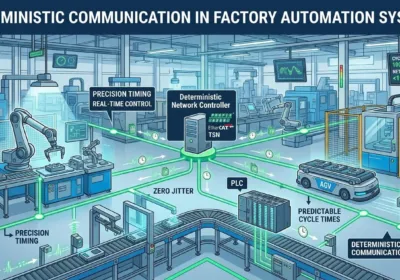
Controllogix controllers execute control logic to manage machinery and processes. They operate on a scan cycle: reading inputs, solving the user-written logic program, and updating outputs. This deterministic principle ensures predictable machine behavior. Moreover, their modular architecture allows for seamless integration of I/O, communication, and safety modules. Therefore, they form a scalable backbone for everything from simple machine control to full plant-wide automation solutions.
Detailed Analysis of Key 1756 Controller Models
Each 1756 model serves a distinct purpose within the factory automation ecosystem. Understanding their differences is crucial for optimal system design and cost-effectiveness.
1756-L83EK: The Standard for Large-Scale Control
The Allen-Bradley 1756-L83EK is a high-capacity controller compatible with Logix 5000 software. It features substantial memory for extensive programming and data handling. This model is ideal for complex, large-scale applications like automotive assembly lines or major material handling systems. Its robustness ensures reliable performance in demanding 24/7 operations.
1756-L83EP: Enhanced Performance for Demanding Applications
Building on the L83EK, the Allen-Bradley 1756-L83EP offers enhanced processing power. This makes it suitable for applications requiring high-speed logic solving or complex data processing. Think of high-speed packaging lines or intricate batch process control. The additional performance headroom can future-proof your control system against expanding requirements.
1756-L83ES: Integrating Safety and Standard Control
The Allen-Bradley 1756-L83ES is a safety-rated controller. It consolidates standard and safety control into a single platform, simplifying architecture. It complies with international safety standards (e.g., IEC 61508, ISO 13849). Consequently, it is perfect for applications like robotic cells or press lines where functional safety (SIL 3, PL e) is mandatory. This integration often reduces wiring, panel space, and overall lifecycle costs.
1756-L83EXT: Built for Extreme Environments
Engineered for harsh conditions, the Allen-Bradley 1756-L83EXT operates reliably in extreme temperatures and high-vibration settings. It is designed for outdoor or unprotected industrial areas like mining, marine, or oil & gas facilities. Its rugged construction ensures continuity in environments where standard electronics would fail.
1756-L55M13: The Proven Workhorse for Legacy and Upgrade Projects
The Allen-Bradley 1756-L55M13 is a reliable, medium-capacity controller. It remains a popular choice for legacy system upgrades or mid-sized applications. While it has less memory than newer L8x models, its proven reliability and cost-effectiveness make it an excellent solution for many machine control and discrete manufacturing tasks.
Selection Guide: Choosing the Right 1756 Controller
Selecting the correct model hinges on your specific application needs. Consider these key technical points:
- ✅ Application Scale & Complexity: Choose L83EK/EP for large, complex systems; L55M13 may suffice for simpler tasks.
- ✅ Safety Requirements: The L83ES is essential for applications requiring certified safety control.
- ✅ Environmental Conditions: Specify the L83EXT for harsh, non-climate-controlled environments.
- ✅ Performance Needs: Opt for the L83EP if your process involves high-speed data or complex algorithms.
- ✅ Lifecycle & Budget: Balance cutting-edge features (L8x) with proven value (L55M13) based on project scope.
From PLCDCSHUB’s experience, a common mistake is under-specifying memory or performance, leaving no room for future expansion. Always plan for a 20-30% margin beyond initial requirements.
Practical Application Scenarios and Solutions
Here are real-world scenarios where each controller excels:
- ⚙️ Pharmaceutical Batch Plant: An L83EP handles complex recipe management and regulatory data tracking.
- ⚙️ Automotive Stamping Press: An L83ES manages standard motion control and safety interlocks for operator protection.
- ⚙️ Offshore Wind Turbine Control Cabinet: An L83EXT withstands salt spray, moisture, and temperature swings.
- ⚙️ Water Treatment Facility Upgrade: An L55M13 provides a cost-effective upgrade path for existing pump and valve control.
Author’s Insight and Industry Perspective
The trend is clearly toward convergence. Platforms like the L83ES that combine OT, IT, and safety functions reflect the industry’s move to simplified, networked architectures. As an authorized supplier, PLCDCSHUB observes that clients increasingly seek these integrated solutions to reduce complexity. When selecting a controller, consider not just the immediate task but also its role in your plant’s digital transformation journey. A controller today is a data node on the Industrial Internet of Things (IIoT) network tomorrow.
Frequently Asked Questions (FAQ)
Q: Can I mix different 1756 controllers on the same ControlNet or EtherNet/IP network?
A: Yes, the Controllogix platform is designed for such interoperability. However, ensure your Logix 5000 project firmware revisions are compatible across all controllers for optimal communication.
Q: What is a practical first step when migrating from a PLC-5 or SLC 500 system to a 1756 Controllogix?
A: Start with a thorough audit of your existing I/O and program structure. Rockwell Automation provides conversion tools, but planning the new architecture (often a chance to simplify and standardize) is key. Many users begin with a pilot machine using an L55M13 or L83EK.
Q: From a maintenance perspective, what is the most common oversight with these controllers?
A: Failing to regularly back up the controller’s firmware and program files. Also, neglecting to plan for battery replacement on the memory module can lead to program loss during a power outage. Schedule these into your preventive maintenance plan.
Ready to Specify Your Ideal Controllogix Solution?
Choosing the right Allen-Bradley controller is critical for your system’s performance and longevity. For detailed specifications, competitive pricing, and expert technical support for all 1756 series controllers, visit the official PLCDCSHUB Limited website. Their team can help you navigate the selection process and ensure you get the optimal component for your industrial automation needs.
Related Posts