
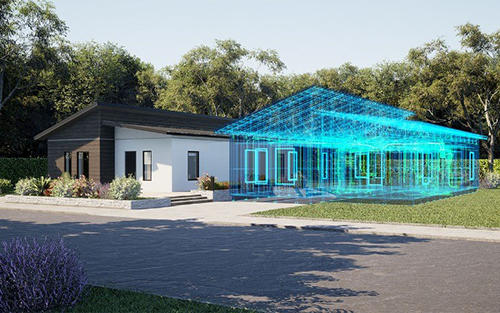
Industrial Automation Solutions for Sustainable Housing Manufacturing
Industrial Automation Transforms Housing Construction with Digital Twins
The construction industry is undergoing a digital revolution. Siemens and ADMARES are demonstrating how industrial automation can solve global housing challenges. Their partnership showcases a shift from traditional methods to scalable, sustainable manufacturing.
The Housing Crisis Demands Industrial Solutions
Global housing shortages require innovative approaches. Traditional construction faces labor shortages and inefficiencies. According to MarketsandMarkets, the modular construction market will reach $115 billion by 2027. This growth reflects increasing industry digitization.
ADMARES Reimagines Home Manufacturing
ADMARES applies manufacturing principles to home building. Founded in 2016, the company treats homes as products rather than projects. Their approach leverages industrial automation and digitalization. Consequently, they achieve remarkable production speeds and sustainability benefits.
Siemens Xcelerator Enables Digital Transformation
The Siemens Xcelerator platform provides crucial technology components. ADMARES utilizes multiple Siemens solutions:
- ✅ Siemens Designcenter for modular design
- ✅ Teamcenter for product lifecycle management
- ✅ Simcenter for validation and testing
- ✅ Opcenter for manufacturing execution
These tools create a comprehensive digital twin of both product and process.
Smart Factory Achieves Record Production Speed
The ADMARES facility represents a breakthrough in factory automation. Siemens automation hardware and software enable exceptional efficiency. The factory achieves a takt time of 22.5 minutes per building unit. Therefore, it produces a complete 1,400 ft² home in just 45 minutes.
Sustainability Through Advanced Manufacturing
Environmental benefits are significant. The automated process generates 80% less material waste. Overall, it reduces CO₂ emissions by up to 75% compared to conventional methods. These improvements address both housing needs and climate concerns simultaneously.
Digital Twin Technology Creates Smart Homes
Each home incorporates real-time monitoring capabilities. The digital twin extends to operational phase. Homeowners can track energy consumption, water usage, and air quality. This connectivity transforms basic shelter into intelligent living spaces.
Industry Implications and Future Outlook
This collaboration demonstrates broader industry trends. Control systems and PLC technology enable manufacturing transformation. As noted by PLCDCSHUB, “The integration of DCS and PLC systems in construction represents a paradigm shift. It proves that industrial automation principles can revolutionize traditionally conservative sectors.”
Practical Applications and Implementation Scenarios
Manufacturers can apply similar automation strategies:
- ⚙️ Implement digital twins for product and process design
- ⚙️ Integrate MES with automation hardware for production control
- ⚙️ Use modular design principles to enable mass customization
- ⚙️ Deploy real-time monitoring for quality assurance and optimization
For professionals exploring industrial automation solutions, PLCDCSHUB Limited offers comprehensive resources on control systems implementation. Their expertise helps organizations navigate digital transformation in manufacturing environments.
Frequently Asked Questions
How does digital twin technology benefit housing construction?
Digital twins enable virtual testing and optimization. They reduce physical prototyping and identify potential issues before manufacturing begins.
What role do PLC systems play in automated home manufacturing?
PLC systems control manufacturing equipment precisely. They ensure consistent quality and coordinate complex assembly processes automatically.
Can traditional construction companies adopt these methods?
Yes, but successful implementation requires significant digital transformation. Companies must invest in both technology and workforce retraining.