ISA100 Wireless Technology for Industrial Automation Systems
ISA100 Wireless Technology Expands Industrial Automation Applications
ISA100 Wireless establishes itself as a mature industrial communication standard. This technology now supports safety-critical applications across multiple industries. Its stability and flexibility drive continued adoption in industrial automation.
Standardization and Market Acceptance
The International Society of Automation formed the ISA100 Committee in 2005. The standard received ANSI approval in January 2012. It became IEC 62734 and EN 62734 in September 2014. This formal recognition ensures global interoperability. The protocol remains largely unchanged since its final version.
Safety-Critical Application Expansion
ISA100 Wireless now supports mission-critical safety applications. These include gas detection and corrosion monitoring systems. Valve control applications also utilize the technology. Safety Integrity Level 2 certification enables these implementations. The standard combines process control with safety functions effectively.
Technical Enhancements and Features
Recent developments focus on interoperability and integration. Bluetooth Low Energy simplifies device configuration. OPC-UA support enables better data access. PA-DIM integration enhances device management. IPv6 implementation improves network addressing capabilities. These features maintain backward compatibility.
Comparison with WirelessHART Technology
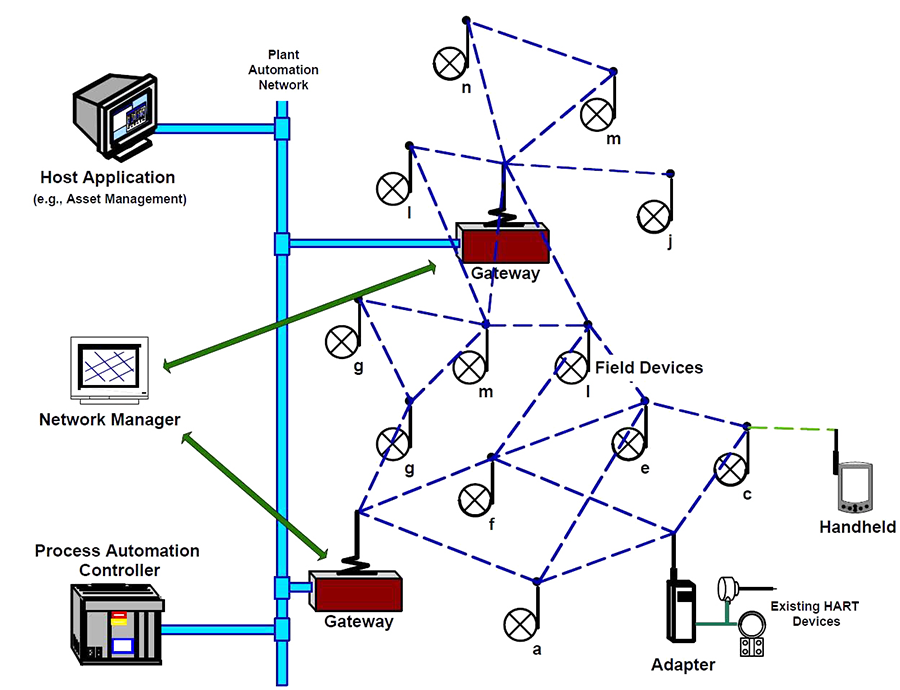
WirelessHART adapts the wired HART protocol for wireless use. It excels in non-time-critical monitoring applications. ISA100 offers guaranteed latency control and protocol tunneling. It supports Modbus, OPC, and Profinet/ProfiSafe protocols. This flexibility enables safety-certified applications.
Industrial Wireless Technology Landscape
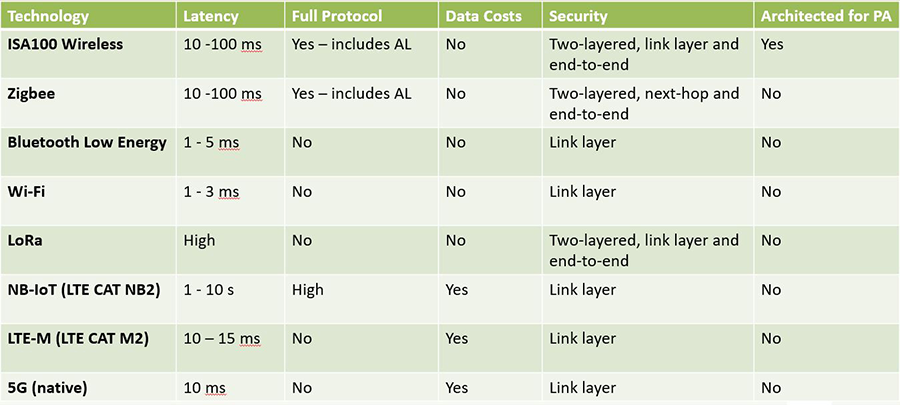
Multiple wireless technologies serve different industrial needs. LoRa provides long-range, low-power communication. Bluetooth Low Energy enables device configuration. Wi-Fi offers high bandwidth for specific applications. 5G promises future automation capabilities. Each technology serves distinct use cases appropriately.
Market Trends and Industry Adoption
The industrial wireless sensor network market grows at 12.4% annually according to MarketsandMarkets. ISA100 adoption increases in oil and gas facilities significantly. Chemical plants implement wireless safety systems extensively. From PLCDCSHUB’s perspective, ISA100 integrates well with modern DCS and PLC systems. Its maturity makes it suitable for critical industrial applications.
Key Application Scenarios
✅ Gas Detection Systems: SIL2-certified wireless safety monitoring
⚙️ Corrosion Monitoring: Predictive maintenance in harsh environments
🔧 Valve Control: Remote operation with latency guarantees
📊 Steam Trap Monitoring: Energy efficiency optimization
Implementation Best Practices
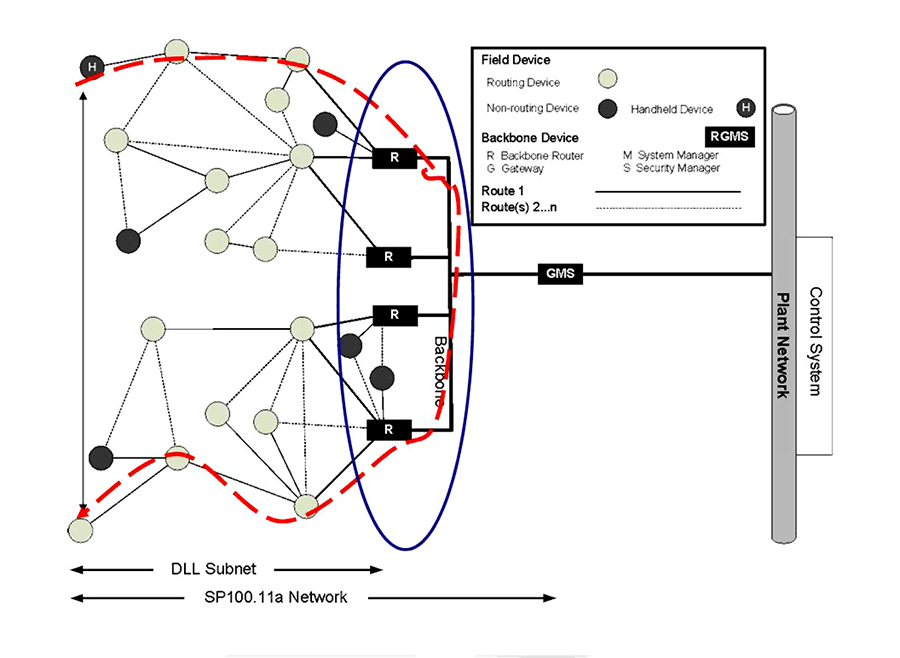
Industrial facilities should assess specific application requirements first. Consider latency needs and safety certification requirements. Evaluate existing infrastructure and protocol compatibility. Plan network topology for optimal coverage and redundancy. Ensure proper cybersecurity measures are implemented.
Industrial automation professionals face complex wireless technology decisions. Discover comprehensive resources for industrial communication systems at PLCDCSHUB. Our platform provides expert guidance for selecting and implementing wireless automation solutions.
Frequently Asked Questions
What distinguishes ISA100 from other wireless protocols?
ISA100 offers guaranteed latency control and protocol tunneling capabilities. It supports safety-critical applications with SIL2 certification requirements.
Can ISA100 coexist with other wireless technologies?
Yes, the standard includes coexistence mechanisms for industrial environments. Proper network planning ensures optimal performance with other systems.
What industries benefit most from ISA100 implementation?
Oil and gas, chemical processing, and power generation show strong benefits. These industries require reliable wireless communication for safety applications.