IT-OT Convergence Strategy for Manufacturing Efficiency
IT-OT Convergence Transforms Manufacturing Efficiency and Innovation
Manufacturers increasingly integrate IT and OT systems. This convergence drives significant competitive advantages. Companies achieve better efficiency and sustainability as a result.
Understanding IT-OT Convergence
IT-OT convergence connects two distinct technology domains. Information Technology handles data and business systems. Operational Technology controls physical processes and machinery. Together they create seamless information flow across organizations.
Market Growth and Projections
The IT-OT convergence market shows strong growth potential. According to MarketsandMarkets, this market will reach $23.2 billion by 2027. This represents a 9.8% compound annual growth rate. Gartner research supports this positive outlook.
Key Technology Components
Successful convergence requires several critical elements:
- Digital Twin technology for virtual replication
- Unified Namespace architectures for data integration
- Edge computing platforms for local processing
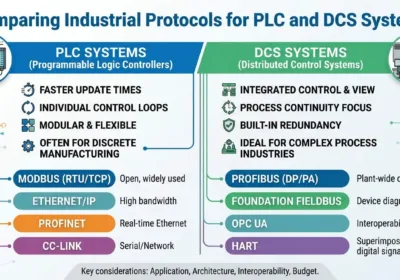
- PLC and DCS systems for operational control
- Cloud connectivity for enterprise integration
Operational Benefits and Advantages
Manufacturers gain multiple advantages from convergence:
- Predictive maintenance reduces downtime by 40%
- Energy optimization cuts operational costs by 15-20%
- Real-time monitoring improves quality control
- Automated reporting enhances compliance management
- Workforce productivity increases through better tools
Control Systems Integration
Modern control systems enable effective IT-OT convergence. PLC systems provide real-time operational data. DCS platforms manage complex process interactions. SCADA systems offer supervisory control capabilities. These systems form the foundation for digital transformation.
Implementation Challenges
Companies face several significant hurdles during implementation:
- Cybersecurity concerns affect 23% of OT environments
- Legacy system compatibility creates integration issues
- Organizational silos hinder collaboration
- Skill gaps delay project timelines
- Cultural differences between IT and OT teams
Author’s Analysis: Control Systems Perspective
PLCDCSHUB observes critical success factors for convergence. Modern PLC systems must support IT connectivity protocols. DCS platforms need robust cybersecurity features. Control system architects should plan for data integration from the start. Successful implementations often use phased approaches.
Practical Implementation Strategy
Manufacturers should follow these steps for success:
- Assess current IT and OT infrastructure capabilities
- Develop a phased implementation roadmap
- Establish cross-functional implementation teams
- Prioritize cybersecurity from the beginning
- Select scalable control system architectures
Real-World Application Scenarios
These examples show successful implementations:
- Automotive plants use digital twins for layout optimization
- Food processing facilities monitor energy consumption in real-time
- Pharmaceutical companies automate compliance reporting
- Electronics manufacturers implement predictive maintenance
Control Systems Foundation
Reliable control systems enable successful IT-OT convergence. PLCDCSHUB provides essential industrial automation components. Our PLC and DCS solutions support seamless data integration. They help bridge the gap between operations and enterprise systems.
Frequently Asked Questions
What is the main benefit of IT-OT convergence?
Companies gain real-time operational visibility and better decision-making capabilities. This improves efficiency and reduces costs significantly.
How long does typical implementation take?
Most organizations require 12-24 months for full implementation. Phased approaches help manage complexity and risk effectively.
Which control systems work best for convergence?
Modern PLC systems with Ethernet connectivity and DCS platforms with API support work well. Systems should support standard communication protocols.
Related Posts