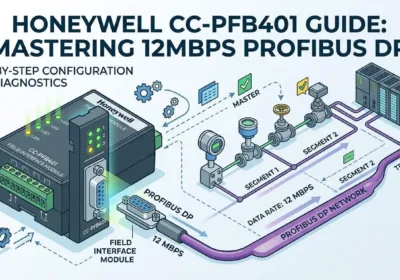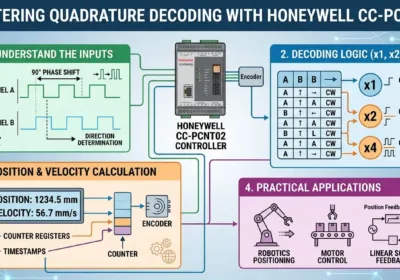
Schneider 170PNT11020: Profibus DP Slave Integration Guide
Technical Deep Dive: Profibus DP Protocol Performance
The Schneider Electric Momentum 170PNT11020 serves as a critical bridge for legacy and distributed I/O systems. This module allows seamless integration into Profibus DP networks as a dependable slave device. While modern facilities often shift toward Ethernet-based protocols, Profibus DP remains a cornerstone in chemical plants and process industries worldwide. At PLCDCS HUB, we observe that this module’s primary value lies in its ability to maintain stable communication without requiring a full infrastructure overhaul. It offers a significant cost advantage for brownfield projects by preserving existing Momentum I/O hardware.
The 170PNT11020 functions exclusively as a Profibus DP slave. Consequently, it relies on a DP master, such as a Siemens S7 or Schneider Quantum PLC, for cyclic data exchange. This master-slave relationship ensures deterministic communication. Such predictability is essential for safety-related logic and interlocks within continuous manufacturing processes. Furthermore, the module adheres to IEC 61158 standards. This compliance guarantees that engineers can integrate the device into multi-vendor environments using standard GSD files.

Maximizing Efficiency through Modular I/O Mapping
This communication adapter supports flexible I/O slot configurations defined within the GSD file. We recommend that engineers load only the specific modules required for the application. By doing so, you minimize the bus load and significantly improve response times. This optimization is particularly vital in large-scale factory automation networks where multiple slaves compete for bandwidth. Efficient data mapping ensures that the PLC processes critical signals without unnecessary latency.
Resilience in Harsh Industrial Environments
Schneider designed the Momentum platform to thrive in demanding settings. These modules resist electrical noise and extreme temperature fluctuations common in industrial cabinets. In our experience at PLCDCS HUB, this robustness leads to fewer communication dropouts in high-interference zones like compressor stations. Reliability in these environments translates directly to lower maintenance costs and reduced unplanned downtime.
Proactive Maintenance and GSD Configuration Best Practices
Most field issues stem from software configuration errors rather than hardware failure. To ensure a smooth commissioning process, follow these technical steps:
Download the latest GSD file version from the official Schneider Electric portal.
Import the GSD file into your specific configuration tool, such as TIA Portal.
Set the unique station address using the physical rotary switches on the module.
Verify that the software configuration matches the physical order of the I/O modules.
Cross-check the firmware version to prevent compatibility conflicts during startup.
Effective Wiring and Surge Protection Strategies
Signal integrity is paramount in VFD-heavy environments. To prevent intermittent errors, always ground the Profibus cable shield using 360° clamps at both ends. Additionally, maintain physical separation between communication lines and high-voltage power cables. For outdoor installations like pumping stations, we strongly advise installing external surge suppressors. Since the 170PNT11020 lacks integrated surge protection, these external measures safeguard your investment against lightning strikes.
Expert Commentary from PLCDCS HUB
As the industry moves toward Profinet and IIoT, the 170PNT11020 remains a vital “workhorse” for maintaining existing systems. At PLCDCS HUB, we believe that replacing functional Profibus segments is often unnecessary if the current architecture meets performance requirements. However, if your facility requires enhanced cybersecurity or high-level diagnostic transparency, a migration plan should be considered. For most stable plants, the priority remains maximizing the lifecycle of current assets through proper shielding and precise configuration.
Industrial Application Scenarios
Oil & Gas: Connecting remote I/O on offshore platforms to a centralized Siemens S7 master.
Chemical Processing: Managing distributed sensors in hazardous areas requiring deterministic data flow.
Water Treatment: Integrating legacy Schneider hardware into a modernized SCADA system via Profibus.
Frequently Asked Questions (FAQ)
Q: How can I resolve a “Module Fault” indicator during the initial setup?
Most faults occur because the physical I/O sequence does not match the GSD configuration. Double-check that every module is seated correctly and that the software addresses match the physical hardware slots.
Q: What is the most common cause of intermittent communication loss with this module?
Poor grounding is the primary culprit. In noisy environments, ensure the shield is grounded at both ends. Also, verify that the Profibus terminators are “ON” only at the two ends of the network segment.
Q: When is it time to stop repairing and start migrating to a newer platform?
If your local technical team struggles to find replacement parts or if you need integration with cloud-based analytics, consider migrating to Profinet. Otherwise, the 170PNT11020 is robust enough for several more years of service.
Looking for genuine Schneider Electric components or technical support? Visit PLCDCS HUB Limited to explore our extensive inventory of industrial automation parts and expert solutions.
Related Posts