

Service Robot Market Grows 9% Amid Labor Shortages
Service Robot Market Expands 9% Amid Global Labor Shortages
Professional service robot sales reached nearly 200,000 units in 2024. The International Federation of Robotics reports significant growth across multiple sectors. Labor shortages and demographic changes drive this expansion.
Market Growth and Key Drivers
Service robot sales increased 9% year-over-year in 2024. Companies face persistent workforce challenges globally. Consequently, they invest in automation solutions increasingly. The robot-as-a-service model grows particularly rapidly at 31%.
Transportation and Logistics Dominance
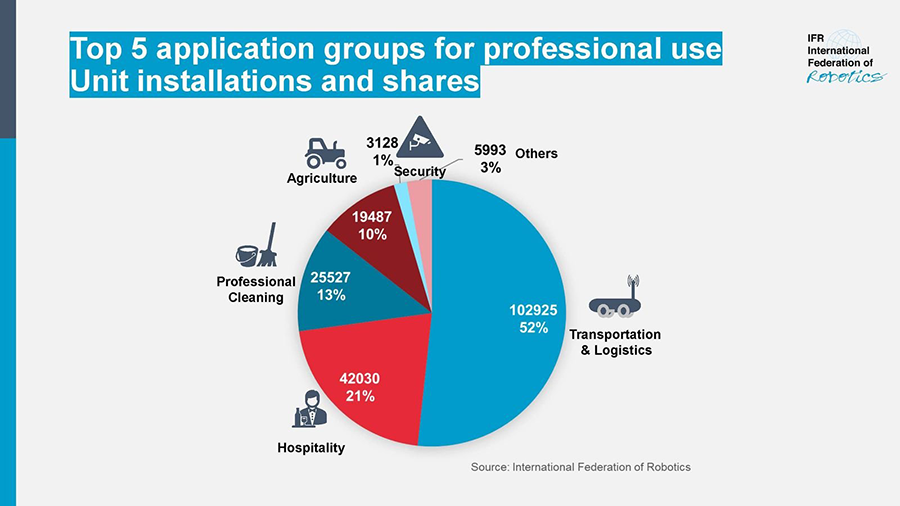
This sector represents over half of all professional service robots. Sales reached 102,900 units with 14% growth. Mobile robots handle goods transport and material handling. Moreover, RaaS adoption increased 42% in this segment alone.
Hospitality and Cleaning Applications
Hospitality robots ranked second with 42,000 units sold. These include guidance systems and telepresence robots. Professional cleaning robots grew 34% to 25,000 units. Floor cleaning represents the primary application area.
Medical Robotics Expansion
Medical robot sales surged 91% to approximately 16,700 units. Rehabilitation robots led with 106% growth increase. Surgical robots increased 41% year-over-year. Diagnostic laboratory automation grew an impressive 610%.
Agricultural and Security Applications
Agricultural robot sales reached 19,500 units despite 6% decline. Security and rescue robots grew 19% to 3,100 units. Three-quarters serve security monitoring applications. These sectors address specific operational challenges.
Consumer Robot Market Performance
Consumer service robot sales reached 20 million units globally. This represents 11% year-over-year growth. Domestic tasks like floor cleaning dominate this category. European and Asian companies led this expansion.
Industry Leadership Perspective
IFR President Takayuki Ito emphasizes diverse application demand. Companies prefer subscription models over capital purchases. This approach reduces initial investment barriers significantly. The RaaS fleet expansion demonstrates this trend clearly.
Market Segmentation Analysis
- Transportation & Logistics: 102,900 units (14% growth)
- Hospitality: 42,000 units (11% decline)
- Professional Cleaning: 25,000 units (34% growth)
- Agricultural: 19,500 units (6% decline)
- Security & Rescue: 3,100 units (19% growth)
Global Market Context
The service robot market demonstrates strong momentum worldwide. According to MarketsandMarkets, this market will reach $102.5 billion by 2029. Labor shortages affect 77% of manufacturers globally. Automation becomes essential for business continuity.
Industrial Automation Integration
Service robots increasingly integrate with control systems. They connect with PLC and DCS platforms seamlessly. This enables coordinated operations in complex environments. Furthermore, it supports data exchange for optimization.
PLCDCSHUB Industry Analysis
At PLCDCSHUB, we observe robotics’ growing role in automation. Service robots complement traditional industrial automation systems effectively. They address labor-intensive tasks outside production lines. The integration between robotics and control systems becomes increasingly sophisticated. We recommend evaluating automation holistically across all operational areas.
Warehouse Implementation Scenario
A distribution center implemented autonomous mobile robots. The system integrates with existing warehouse management systems. Robots transport goods between storage and shipping areas. This reduced manual labor requirements by 40% while improving accuracy.
Frequently Asked Questions
- What factors determine successful service robot implementation? Successful deployments require proper environment assessment, staff training, and integration planning with existing systems and workflows.
- How do service robots differ from traditional industrial robots? Service robots typically operate in human environments performing non-manufacturing tasks, while industrial robots work in controlled environments on production tasks.
- What maintenance considerations apply to service robots? Regular software updates, sensor calibration, and battery management are essential, along with traditional mechanical maintenance procedures.
This market analysis was provided by PLCDCSHUB, delivering expert insights on industrial automation and robotics integration.
Explore automation solutions for your operational challenges. Visit PLCDCSHUB for control components and integration expertise.