The 3500 System: A Foundation for Reliability in Oil & Gas
Why a Robust Control System is Critical for Industrial Automation
The oil and gas industry demands peak operational reliability. Downtime is incredibly expensive. Safety is non-negotiable. Therefore, a robust control system is essential. Industrial automation relies on precise monitoring. It also requires swift control over complex processes. Traditional control systems often fall short. They may lack the redundancy needed. A single component failure can cause a costly shutdown. This is where modern solutions make a difference. These systems are designed to prevent failures. They ensure continuous operation.
Enhancing Safety with the 3500 System
Safety is a top priority in this sector. The 3500 system is a key player. It provides continuous vibration monitoring. This is crucial for rotating machinery. Think about pumps, compressors, and turbines. These are vital assets. The system uses multiple sensors. It detects even minor changes. For example, it can find early signs of bearing wear. This early detection is critical. It allows for proactive maintenance. As a result, catastrophic failures are avoided. The system’s design minimizes human error. It provides clear, actionable data.
The Role of Redundancy and Diagnostic Capabilities
System redundancy is a core feature. The 3500 system uses a dual-redundant power supply. It also has dual-redundant communication links. This design ensures that a single point of failure does not exist. Moreover, its diagnostic capabilities are advanced. It can self-check its own health. This ensures the system itself is reliable. It provides a deeper level of insight. This goes beyond simple alarms. Operators get detailed information. This allows them to troubleshoot problems quickly. In addition, this proactive approach saves time and money. It moves maintenance from reactive to predictive. This is a key principle of modern factory automation.
Integrating the 3500 System into Existing DCS and PLC Frameworks
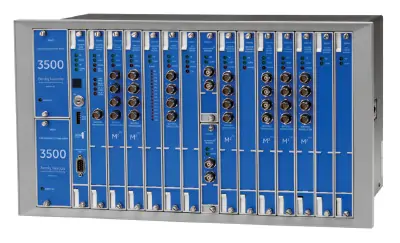
The 3500 system integrates seamlessly. It works with existing DCS and PLC platforms. This is a major advantage. Companies do not have to replace their entire infrastructure. It can be added as a specialized module. For instance, it can send data to a central DCS. It can also communicate with a master PLC. This allows for a unified view. Operators can see vibration data alongside process variables. Therefore, decision-making is faster and more informed. This integration makes implementation straightforward. It avoids compatibility issues.
My Perspective: The Future of Reliability
I believe the 3500 system represents a significant step forward. It bridges the gap between machinery health and process control. Traditionally, these were separate domains. Now, they are intertwined. This holistic view is the future. It allows for smarter operations. Companies can optimize asset performance. They can also extend equipment life. Furthermore, this approach reduces unexpected downtime.

Application Scenario: A Proactive Solution
Imagine an offshore oil rig. A critical gas compressor is running. The 3500 system is monitoring it. It detects a subtle increase in vibration. The system sends an alert. The data indicates a potential imbalance. Operators receive the warning immediately. They schedule maintenance for the next planned shutdown. They can address the issue before it causes a major failure. This is the power of proactive monitoring.
For more information and to explore customized solutions, please check out the products offered by PLCDCS HUB Limited.