
Fix Honeywell XNX Supply Voltage Out of Range Errors
Troubleshooting Honeywell XNX Supply Voltage Out of Range Faults
Why Static 24VDC Measurements Mislead Field Technicians
When the Honeywell XNX Universal Gas Detector Transmitter triggers F-10 or F-11 supply voltage errors, technicians often measure 24VDC at the terminals and assume the power is healthy. However, field experience across industrial automation environments proves that a static multimeter check hides critical runtime voltage drops. In demanding factory automation and hazardous process facilities, identifying dynamic power sags prevents unnecessary hardware replacements and costly plant downtime.
The Impact of Long Cable Runs on Voltage Stability
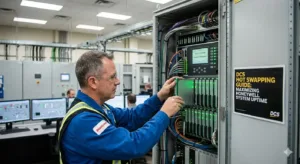
Gas detection transmitters often sit dozens or hundreds of meters away from main control room power distribution cabinets. Consequently, excessive cable length, undersized wire gauges, and high-resistance terminal blocks cause severe voltage sags under full load conditions. According to industrial safety instrumentation reports, wiring voltage drops account for a significant share of intermittent supply faults. At PLCDCS HUB, we always recommend measuring operating voltages directly at the XNX terminals while the device runs under active loads.
Transient Power Dips and Common-Mode Grounding Issues
Industrial power supplies frequently experience ripple, electrical noise, or transient dips when multiple field instruments share a single 24VDC bus. If relays, sirens, or solenoid valves switch simultaneously, the resulting supply sag triggers internal transmitter voltage monitors. Furthermore, high-resistance ground paths or corroded return lines distort the reference potential. Protecting your control systems requires verifying both positive and negative power distribution rails.
Step-by-Step Diagnostic Checklist
- ✅ Measure operating voltages directly at the XNX power input terminals under active load conditions.
- ⚙️ Use a multimeter with a Min/Max capture function to record transient voltage dips.
- 🔧 Inspect terminal block screws for looseness, oxidation, or corrosion caused by environmental moisture.
- ✅ Verify that cable cross-sections and loop lengths do not exceed allowable voltage drop limits.
- ⚙️ Check total power supply capacity to ensure it handles all shared field load surges.
Expert Recommendations from PLCDCS HUB
Rushing to replace a gas detector because of an F-10 fault without checking cable integrity wastes valuable maintenance resources. Systematic troubleshooting always starts at the field wiring and power distribution level. Visit PLCDCS HUB to explore our extensive inventory of genuine Honeywell gas detection components and expert technical support resources designed to secure your plant operations.
Application Scenarios: Root Cause Analysis
Scenario A: Intermittent Sags on Long Cable Runs
If a distant tank farm transmitter reports F-10 only during high ambient temperature peaks, high loop resistance causes the operating voltage to drop below acceptable thresholds.
Scenario B: Shared Power Bus Surges
If an F-11 fault occurs right when heavy alarm horns or solenoid valves activate, shared power supply loading temporarily starves the transmitter input.
Frequently Asked Questions
Q1: Does an F-10 supply voltage fault mean my Honeywell XNX transmitter is completely broken?
No. Most supply voltage errors stem from external wiring voltage drops, loose terminal connections, or shared power supply sags rather than internal transmitter damage.
Q2: What should I check first when my multimeter shows 24VDC but the XNX still reports an error?
Always measure the voltage dynamically while the device operates or use a Min/Max meter to catch hidden transient voltage drops during field activity.
Q3: How do I ensure full compatibility when sourcing a replacement gas detector transmitter?
Match your exact part numbers, sensor configurations, output protocols, and hazardous area certifications. Contact our technical team at PLCDCS HUB for precise replacement guidance.



No Comments