
How to Troubleshoot ABB Freelance PPC322BE Communication Faults
Fixing Link Down Alarms: ABB PPC322BE Troubleshooting Sequence
An ABB Freelance PPC322BE operator panel might display a “Link Down” alarm during standard operation. In most cases, engineers trace this fault to the backplane communication path or the optical fiber network. For continuous-process industries, an incorrect troubleshooting order extends costly system downtime significantly. Therefore, field technicians must follow a structured diagnostic sequence to isolate the true root cause. Always verify the backplane infrastructure before replacing expensive optical transceivers or fiber cables.
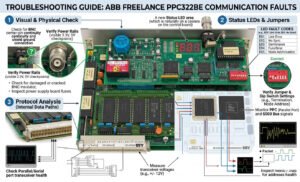
Why Backplane Bus Integrity Determines Communication Initialization
The PPC322BE module relies entirely on the ABB control rack backplane for data exchange and addressing. If the backplane suffers from oxidation, loose slots, or voltage fluctuations, initialization will fail completely. However, the optical link might still show physical light activity while the upper-layer network protocol remains offline. In high-vibration turbine rooms, microscopic contact interruptions can trigger intermittent alarms without causing total component failure. Consequently, stabilizing the local power distribution must be your absolute first priority.
Expert Insight from PLCDCS HUB: We frequently notice field teams swapping perfectly healthy fiber modules during emergency outages. In reality, a dusty backplane connector or a loose rack screw causes most of these connection failures. Cleaning the physical pins with electronics cleaner resolves the issue without wasting expensive spare parts in your control systems.
How Optical Transceiver Signal Integrity Impacts DCS Redundancy
ABB DCS networks demand strict compliance with optical attenuation and wavelength matching standards. A degraded transceiver might emit light but fail under high data loads during a network switchover. Typical field symptoms include random network dropouts, HMI synchronization lag, and redundant channel timeout errors. In refinery applications with long cable runs, airborne contaminants like oil mist often dirty the LC or ST connectors. As a result, excessive signal attenuation creates communication bottlenecks that mimic hardware failure.
Environmental Resistance and Long-Term Control Systems Reliability
PPC322BE panels installed near VFD cabinets or boiler areas face severe thermal stress and electromagnetic interference. These harsh conditions accelerate contact oxidation, grounding instability, and internal component drift over time. To ensure optimal factory automation reliability, maintain cabinet temperatures below 40°C at all times. Moreover, follow the IEC 61000 standards for low-impedance grounding to prevent nuisance communication alarms. Proper cabinet shielding and ventilation protect your sensitive electronic assets from premature aging.
A Structured Diagnostic Sequence for Field Technicians
Isolating network connection faults requires a methodical approach on the plant floor. Maintenance personnel should execute the following steps in order:
- ✅ Inspect Backplane: Turn off rack power, remove the PPC322BE, and check the pins for physical damage.
- ✅ Log Verification: Check the ABB system diagnostic logs for watchdog triggers or bus timeout events.
- ✅ Measure Attenuation: Test the fiber patch cords using a calibrated optical power meter.
- ✅ Clean Connectors: Use specialized optical fiber wipes to remove oil film and dust from ports.
- ✅ Redundancy Validation: Verify that both primary and backup communication modules share identical firmware revisions.
Strategic Buyer’s Guide for PPC322BE Module Upgrades
Consider a hardware upgrade if your operator panel exhibits recurring communication resets or firmware compatibility locks. In legacy systems older than 10 years, cumulative backplane wear degrades signal transmission. When sourcing replacements, verify your exact rack version and optical interface specifications carefully. Mixing incompatible protocol versions can block network synchronization entirely. For brownfield modernization projects, we highly recommend validating part compatibility on a test bench before live deployment.
Application Scenarios and Solutions
- Petrochemical Compressor Stations: Eliminates vibration-induced backplane contact drops using reinforced mounting kits.
- Offshore RTU Shelters: Prevents salt-mist optical attenuation through sealed IP-rated enclosures.
- High-Noise MCC Rooms: Isolates VFD harmonic interference by implementing single-point grounding configurations.
For authentic ABB components and specialized technical support, visit PLCDCS HUB Limited today. We supply the certified hardware and engineering expertise your industrial automation networks demand.
Frequently Asked Questions (FAQ)
1. Can I hot-swap the PPC322BE panel while the plant is running?
Yes, the platform supports hot-swapping, but you must ensure the redundant network channel is fully active. Replacing the module under fluctuating power or bad ground conditions risks tripping the entire node.
2. What is the acceptable optical attenuation limit for ABB fiber links?
The exact budget depends on your cable distance, but typical multi-mode links should not exceed 3.5 dB loss per kilometer. Always use an optical power meter to verify loss before condemning any transceiver.
3. Why does the “Link Down” error return after replacing both the module and the fiber?
The issue likely resides in an upstream managed switch port or an unmapped IP address conflict. Verify your switch port configurations and ensure no firmware mismatches exist between your communication cards.