
Service Robot Market Growth 2025 | Industrial Automation
Service Robot Market Expansion: Transforming Industrial Automation and Healthcare
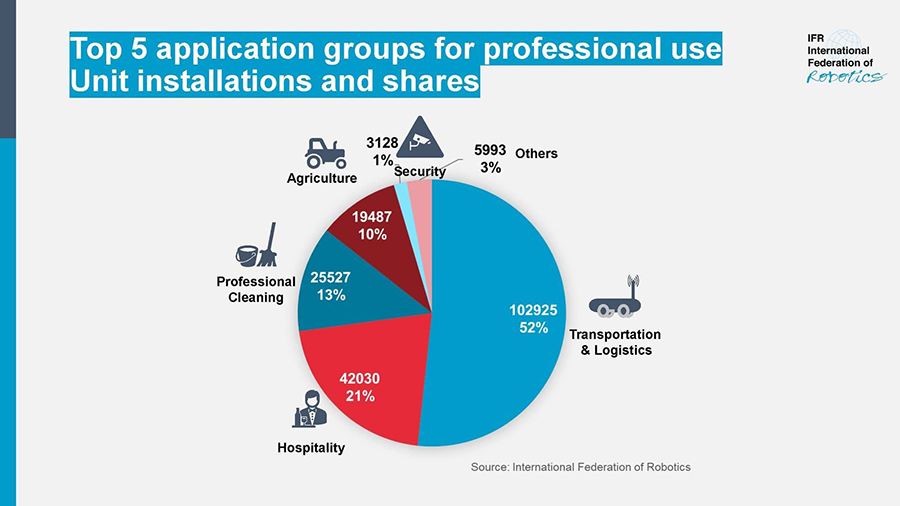
Professional service robot sales demonstrate significant global growth according to IFR data. The market reached nearly 200,000 units in 2024 with 9% annual growth. Labor shortages and demographic changes drive automation adoption across multiple sectors. According to MarketsandMarkets, the service robot market will reach $102.5 billion by 2028.
Market Overview and Growth Drivers
Service robot adoption addresses critical workforce challenges effectively. Companies implement automation to compensate for skilled labor shortages. The aging population increases demand for medical robotics substantially. These factors contribute to sustained market expansion across industries.
Transportation and Logistics Automation Leadership
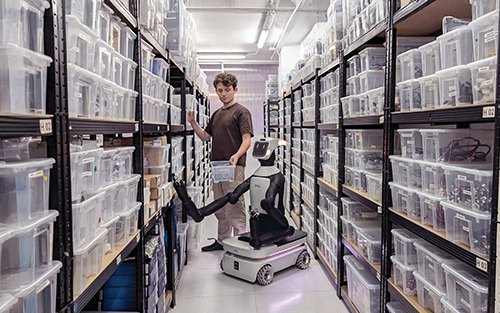
Transportation robots dominate professional service robot applications. The sector achieved 102,900 unit sales during 2024. Mobile robots handle material transport and goods movement efficiently. Key developments include:
- 42% growth in Robot-as-a-Service adoption
- Indoor transportation as primary application area
- Automated guided vehicles for warehouse operations
- Autonomous mobile robots for manufacturing facilities
Hospitality and Service Sector Applications
Hospitality robots maintain significant market presence despite recent declines. These systems perform customer service and information functions effectively. Applications include mobile guidance and telepresence solutions. New food preparation applications demonstrate sector evolution.
Professional Cleaning Robot Expansion
Cleaning robots represent the third largest service robot category. The market grew 34% with over 25,000 units sold. Floor cleaning automation addresses labor-intensive maintenance tasks. These systems operate across commercial and industrial environments.
Agricultural Robotics Market Position
Agricultural robots experienced moderate contraction during 2024. Sales reached approximately 19,500 units with 6% decline. Cultivation and milking applications primarily drove this reduction. However, precision agriculture continues offering growth potential.
Medical Robotics Exceptional Growth
Medical robots demonstrate remarkable market expansion across categories:
- Rehabilitation robots: 106% growth rate
- Surgical robots: 41% increase in adoption
- Diagnostic robots: 610% expansion
- Total medical robot sales: 16,700 units
Consumer Service Robot Market Dynamics
Consumer robots achieved 11% growth with 20 million units sold. Domestic task automation dominates this market segment. Regional variations show European and Asian companies leading expansion. Robotic vacuum cleaners remain the primary consumer application.
Robot-as-a-Service Business Model Growth
RaaS adoption increases 31% annually according to IFR data. This approach reduces upfront automation investment requirements. Subscription models make robotics accessible to smaller organizations. The transportation sector leads RaaS implementation with 42% growth.
Industrial Automation Integration
Service robots integrate with traditional industrial control systems effectively. These systems connect with PLC and DCS platforms for coordinated operation. Mobile robots communicate via industrial networks for data exchange. This integration supports comprehensive factory automation strategies.
PLCDCSHUB Industry Analysis
Service robotics represents expanding automation frontier. Key implementation considerations include:
- System integration with existing control infrastructure
- Network architecture for robot communication
- Safety system implementation and certification
- Maintenance planning and spare parts management
- Staff training for operation and troubleshooting
Exploring automation solutions for your facility? Discover industrial robotics and control systems at PLCDCSHUB.
Frequently Asked Questions
What factors determine successful service robot implementation in industrial settings?
Successful implementation requires thorough process analysis and clear objective definition. Environment preparation ensures proper robot operation and safety compliance. Staff training programs facilitate smooth technology adoption. Continuous performance monitoring optimizes system operation over time.
How do service robots integrate with existing industrial automation systems?
Service robots connect via industrial Ethernet networks and standard protocols. They interface with PLC controllers for coordinated operation. Data exchange occurs through established industrial communication standards. This integration enables centralized monitoring and control through existing SCADA systems.
What maintenance requirements do professional service robots typically have?
Regular maintenance includes battery system checks and component lubrication. Sensor calibration ensures accurate navigation and operation. Software updates maintain system security and functionality. Preventive maintenance schedules vary by application intensity and operating environment.
Related Posts


