3D Printing Revolutionizes Industrial Automation Manufacturing
3D Printing Transforms Industrial Automation and Manufacturing
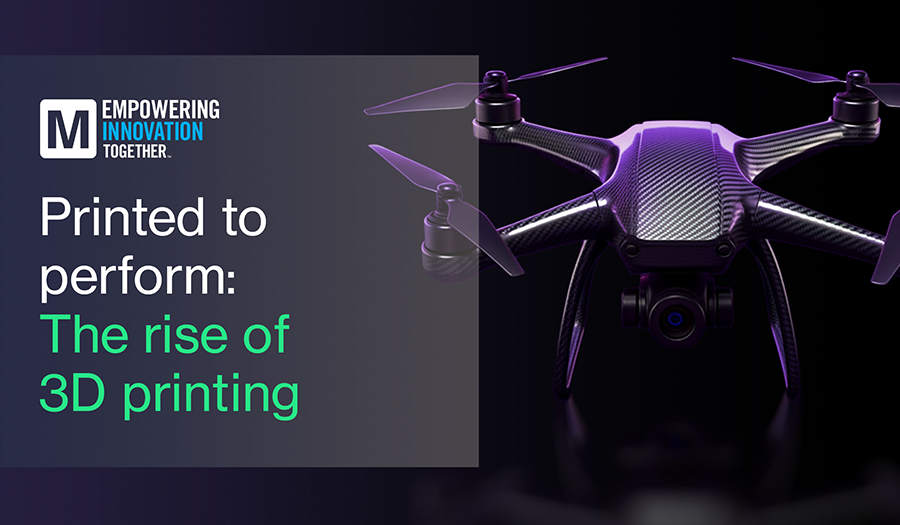
Mouser Electronics Launches Additive Manufacturing Series
Mouser Electronics recently released its latest Empowering Innovation Together series. The program explores advanced 3D printing applications in industrial automation. This installment examines how additive manufacturing revolutionizes factory operations. It specifically focuses on control systems and automation components.
Advanced Manufacturing Capabilities Emerge
Modern 3D printing creates complex geometries impossible with traditional methods. This technology enables intricate internal structures and lightweight components. According to Statista, the global 3D printing market will reach $44.5 billion by 2026. These advancements significantly impact industrial automation and control system design.
AI Integration Accelerates Manufacturing Innovation
Artificial intelligence enhances 3D printing precision and efficiency. AI algorithms optimize material usage and production parameters. This integration reduces manufacturing costs by up to 35%. Moreover, AI-powered tools help engineers design better automation components. They also accelerate prototyping cycles for PLC and DCS systems.
Real-World Industrial Applications Expand
Additive manufacturing now produces FAA-approved titanium engine components. It also creates biomaterial implants for medical applications. In industrial automation, 3D printing enables rapid spare parts production. This capability reduces equipment downtime in factory automation systems. It also supports customized control system enclosures.
Industry Experts Discuss Manufacturing Evolution
Mouser’s podcast features additive manufacturing specialists Mark Beatty and Stefanie Brickwede. They explore how 3D printing alters equipment lifecycles. The discussion covers obsolescence management strategies for industrial automation. Experts also address supply chain challenges through localized manufacturing.
Engineering Workflows Transform Dramatically
Additive manufacturing enables unprecedented design freedom for engineers. It eliminates many traditional manufacturing constraints. Engineers can now create optimized components for factory automation. This includes custom PLC mounts and specialized sensor housings. The technology also facilitates rapid control system prototyping.
Supply Chain Solutions Emerge
3D printing addresses critical supply chain vulnerabilities. It enables on-demand production of industrial components. Manufacturers can produce spare parts locally rather than waiting for shipments. This approach reduces inventory costs for automation system maintainers. It also minimizes production line downtime.
PLCDCSHUB Perspective: Automation Implications
At PLCDCSHUB, we recognize 3D printing’s potential for industrial automation. This technology enables faster control system customization. It also supports rapid prototyping of automation components. However, material limitations remain for some industrial applications. We recommend evaluating each application’s specific requirements carefully.
Practical Implementation Considerations
- Assess component criticality before 3D printing replacement parts
- Verify material properties meet industrial environment requirements
- Consider certification needs for safety-critical automation components
- Evaluate total cost including design time and post-processing
- Explore hybrid manufacturing approaches for complex assemblies
Industrial Automation Applications
3D printing enables numerous industrial automation solutions:
- Custom sensor mounts and brackets for unique installations
- Specialized tooling for automation system maintenance
- Prototype enclosures for new control system designs
- Replacement parts for obsolete automation equipment
- Lightweight components for robotic end-effectors
Connecting Technology to Practical Solutions
Understanding emerging technologies helps optimize industrial automation systems. At PLCDCSHUB, we provide comprehensive resources about automation components and their applications. Visit our PLCDCSHUB platform to explore control systems that integrate with modern manufacturing technologies.
Frequently Asked Questions
How does 3D printing benefit industrial automation systems?
3D printing enables rapid prototyping of custom components, reduces spare part lead times, and allows design optimization for specific automation applications.
What materials are suitable for 3D printed automation components?
Industrial-grade thermoplastics, metal alloys, and composite materials can meet most automation requirements, though material selection depends on application specifics.
Can 3D printed parts replace critical automation components?
While possible for some applications, critical components require careful evaluation of material properties, certifications, and performance under operational conditions.
Related Posts