
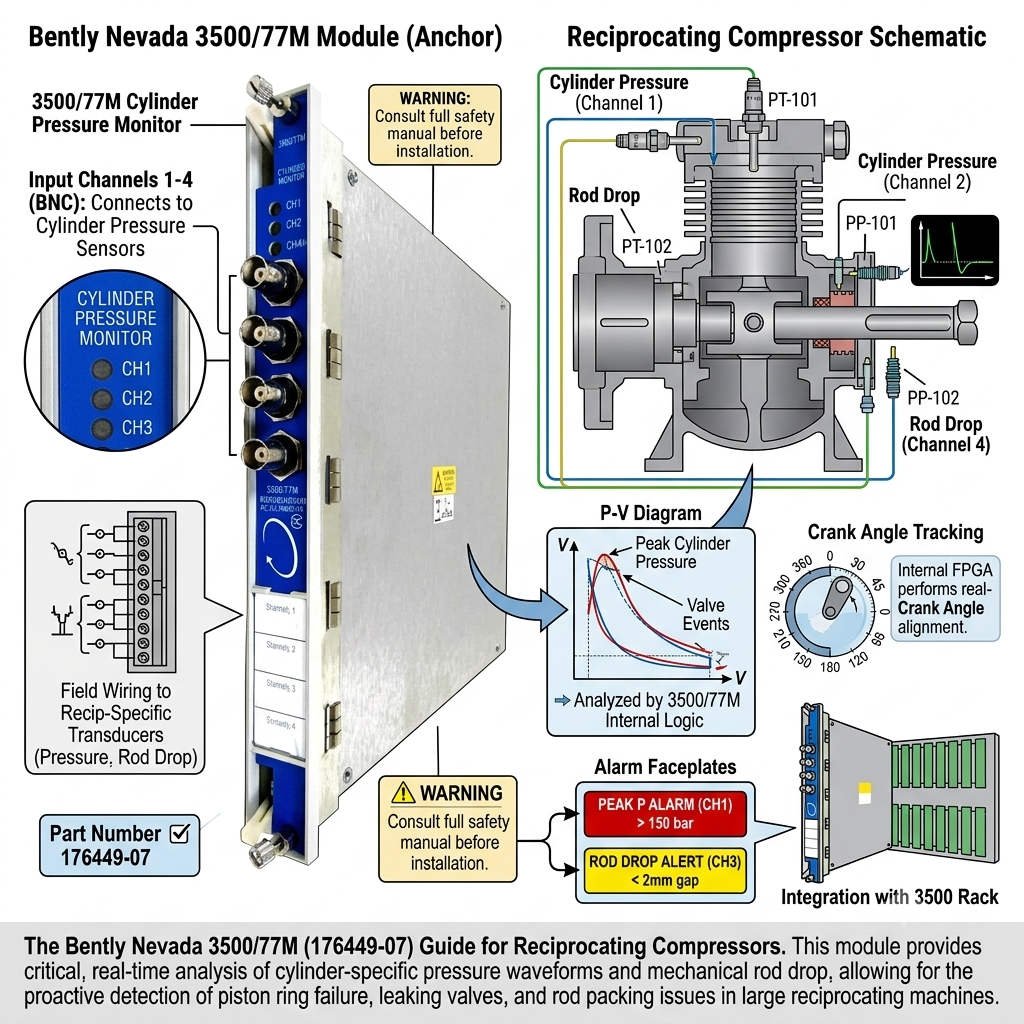
Bently Nevada 3500/77M 176449-07: Reciprocating Compressor Guide
Bently Nevada 3500/77M 176449-07: Essential Guide for Reciprocating Compressor Monitoring
Understanding the 3500/77M Module Purpose
The Bently Nevada 3500/77M 176449-07 is not a standard pressure transmitter card. Instead, it serves as a specialized dynamic cylinder pressure monitor for reciprocating compressors. In the world of industrial automation, it plays a vital role in condition monitoring. It focuses on reciprocating machinery performance rather than static process control. Therefore, engineers must distinguish this module from conventional PLC or DCS analog input cards.
Why Reciprocating Compressors Require Specialized Monitoring
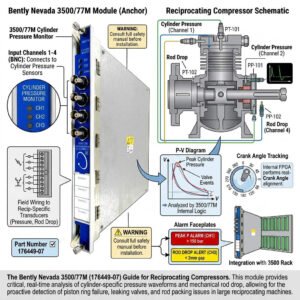
Reciprocating compressors are the backbone of oil and gas, petrochemical, and refinery facilities. However, they face unique mechanical stresses that standard vibration sensors cannot detect. By analyzing dynamic pressure waveforms, the 3500/77M identifies valve leakage and efficiency losses early. At PLCDCS HUB, we often see that integrating this module prevents catastrophic failures in critical compressor trains. It provides deep thermodynamic insights that standard vibration monitoring simply lacks.
Key Technical Features for System Reliability
This module excels by synchronizing pressure data with the crankshaft position. This capability allows for precise P-V (Pressure-Volume) diagrams and rod load analysis. Moreover, it integrates seamlessly into the existing Bently Nevada 3500 machinery protection system. This architecture simplifies alarm management and improves historical trend analysis for predictive maintenance programs.
- ⚙️ The 3500/77M captures high-resolution dynamic pressure signals effectively.
- ⚙️ Crank-angle synchronization ensures accurate valve timing diagnostics.
- ⚙️ It provides direct visibility into cylinder thermodynamic performance.
- ⚙️ Centralized monitoring reduces the need for secondary diagnostic systems.
Expert Installation and Commissioning Insights
Proper installation is crucial for accurate diagnostics. Field engineers often face issues when sensor scaling does not match the monitor configuration. Furthermore, high vibration levels can loosen connectors in the signal path. We recommend protecting all cables with vibration-resistant conduits. Additionally, always revalidate the Top Dead Center (TDC) settings after performing major compressor overhauls.
Selecting the Right Hardware for Your Application
When procurement teams evaluate this component, they must consider the entire monitoring chain. Compatibility with existing rack firmware and Keyphasor signals is non-negotiable. Before finalizing your order, verify your current system revision and available slot capacity. For professional technical advice or sourcing, visit PLCDCS HUB Limited. We help you ensure that your control systems remain robust and fully compliant with API 618 standards.
Practical Solution Scenario
Consider a plant facing intermittent compressor valve issues that vibration sensors missed. By installing the 3500/77M, the maintenance team successfully identified a failing suction valve through pressure trace analysis. This proactive approach saved the facility from an unplanned shutdown. The ability to correlate mechanical health with process performance makes this module an indispensable asset for modern factory automation.
Frequently Asked Questions
Is the 3500/77M compatible with centrifugal compressors?
No. It is specifically engineered for reciprocating machinery and dynamic cylinder pressure analysis. Centrifugal units should use standard vibration and thrust monitoring modules instead.
How can I avoid startup scaling errors with this module?
Always verify the transducer sensitivity settings against the module’s configuration before energization. Mismatched scaling is the most common cause of inaccurate pressure readings during commissioning.
Should I prioritize 3500/77M over vibration monitoring for my compressor?
You should use them as complementary systems. Vibration monitoring detects mechanical wear, while the 3500/77M provides the thermodynamic and valve condition data required for complete health assessment.


