
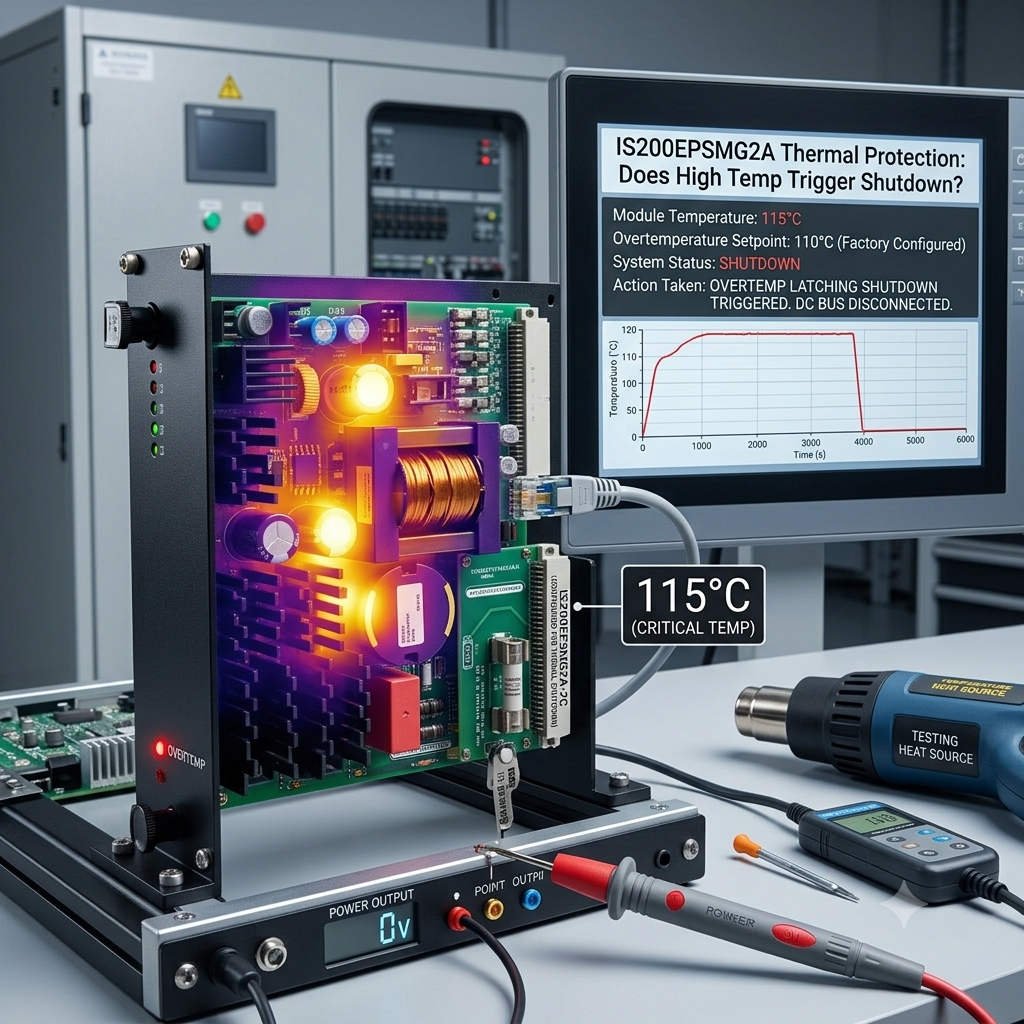
IS200EPSMG2A Thermal Protection: Does High Temp Trigger Shutdown?
Understanding IS200EPSMG2A Thermal Protection in GE Control Systems
The Thermal Management Reality of Power Supply Modules
The IS200EPSMG2A module delivers reliable DC power for GE EX2100 and Mark VI control systems. Many engineers wonder if hitting an 85°C internal threshold triggers an immediate power cutoff. In mission-critical industrial automation, sudden shutdowns often cause more damage than the heat itself. Therefore, the internal logic prioritizes system stability over instantaneous protection. Our team at PLCDCS HUB Limited emphasizes that design engineers prefer controlled diagnostic responses to keep processes running safely.
How Thermal Logic Protects Your Control Systems
Power electronics utilize a multi-stage approach to manage heat. An 85°C reading typically triggers a warning rather than a system trip.
- Warning Stage: The system flags a diagnostic alarm for operators.
- Derating Stage: The module reduces output capacity to lower heat generation.
- Shutdown Stage: The module only stops output if critical thermal limits are reached.
This staged strategy allows maintenance teams to resolve cooling issues during scheduled windows. Consequently, you avoid an unplanned emergency shutdown of your turbine or process-unit.
Leveraging Redundancy in Factory Automation
Modern PLC and DCS architectures rely on redundant power paths to maintain uptime. When a single IS200EPSMG2A module experiences high heat:
- The controller receives a real-time fault status update.
- Redundant modules maintain power delivery to critical loads.
- Operators replace the hot module without interrupting plant operations.
Moreover, this architecture prevents localized heat events from cascading into a total system failure. Reliable power distribution remains the cornerstone of modern industrial reliability.
Optimizing Cabinet Cooling for Longevity
Field data shows that cabinet airflow often dictates the lifespan of your electronic components. High-power drives or nearby resistors frequently create localized hot spots. We suggest the following best practices to protect your hardware investment:
- Verify Fan Integrity: Regularly inspect cooling fans for proper rotation.
- Clean Air Filters: Replace clogged filters to ensure unobstructed airflow.
- Monitor Localized Heat: Measure temperature around the module during peak loads.
- Maintain Spacing: Adhere to manufacturer clearance requirements to prevent heat buildup.
By proactively managing the enclosure environment, you significantly extend the MTBF of your power modules.
Author Insights: Why Preventive Maintenance Matters
At PLCDCS HUB Limited, we observe that most thermal issues stem from aging ventilation systems rather than module defects. Overloading a power supply creates hidden stress on internal components. We recommend maintaining at least 20% spare load capacity in your system design. If you need technical documentation or authentic replacement parts, visit PLCDCS HUB Limited to explore our curated industrial solutions.