Agentic AI in Industrial Automation | PLC & DCS Integration
Agentic AI: The Next Frontier in Industrial Automation
The industrial automation sector is undergoing a fundamental transformation. According to a recent report by MarketsandMarkets, the global smart factory market size is projected to grow from USD 86.2 billion in 2021 to USD 140.2 billion by 2026. This growth is fueled by the rise of Agentic AI, a technology that moves beyond simple task automation to create intelligent, self-optimizing production ecosystems. At PLCDCSHUB, we recognize that this shift is not just about technology; it’s about building a sustainable competitive edge.
Moving Beyond Siloed Industrial Control Systems
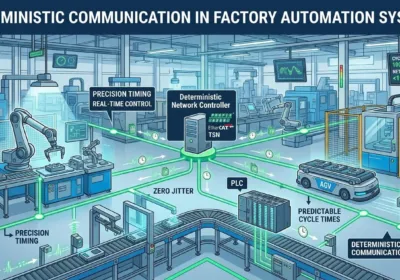
Traditional factory automation often relies on isolated systems. For instance, a PLC (Programmable Logic Controller) might manage a conveyor belt, while a separate DCS (Distributed Control System) oversees reactor temperatures. However, these silos create data fragmentation and operational blind spots. Consequently, enterprises struggle to achieve a unified view of plant performance. Modern industrial automation, therefore, integrates these disparate systems. This integration enables seamless data flow between PLCs, DCS, and SCADA, leading to greater operational agility.
How Agentic AI Enhances Control Systems
Agentic AI acts as the intelligent core for next-generation automation. It orchestrates workflows between AI models, human operators, and legacy hardware like PLCs. For example, an AI agent can predict motor failure by analyzing vibration data from sensors. It then automatically creates a work order in the CMMS and alerts a human technician for verification. This human-in-the-loop (HITL) approach ensures critical decisions have expert oversight. Moreover, this leads to significant efficiency gains and reduced downtime.
Implementing Crucial AI Guardrails in Automation
As AI permeates critical operations, robust governance is non-negotiable. Without proper guardrails, organizations risk safety incidents and non-compliance with standards like IEC 61511 for functional safety. Importantly, AI should augment, not replace, human expertise. Effective governance frameworks define clear collaboration levels:
- Human in the Loop (HITL): A control systems engineer approves an AI-generated setpoint change for a critical distillation column.
- Human on the Loop (HOTL): Operators monitor an autonomous AI-driven batch process, ready to intervene if parameters drift.
- Human out of the Loop (HOOTL): Fully autonomous palletizing robots operate in a contained cell, with systems in place to manage exceptions.
From our experience at PLCDCSHUB, a phased implementation of these guardrails is key to building trust and ensuring a smooth transition.
A Human-Centric Future for Factory Automation
The goal of Agentic AI is to augment human potential, not eliminate it. By handling repetitive tasks and complex data analysis, it frees engineers to focus on innovation, process optimization, and strategic problem-solving. This human-centric model is the future of industrial automation. Companies that successfully blend AI’s precision with human oversight will lead in productivity and resilience.
Practical Application Scenarios for Modern Plants
How does this translate to the factory floor? Here are two common scenarios where Agentic AI delivers value:
- Predictive Maintenance: AI agents analyze historical and real-time data from motor drives and PLCs to forecast equipment failure weeks in advance, scheduling maintenance proactively to avoid unplanned downtime.
- Energy Optimization: AI dynamically adjusts setpoints for HVAC, compressed air, and DCS-controlled processes based on production schedules and real-time energy pricing, cutting utility costs by 10-15%.
To explore how these solutions can be built on a foundation of reliable PLCs and DCS components, visit PLCDCSHUB. Our platform offers the essential control system hardware that forms the backbone of any intelligent automation initiative.
Frequently Asked Questions (FAQ)
Q: How does Agentic AI differ from traditional robotic process automation (RPA) in manufacturing?
A: While RPA is designed for rule-based, repetitive software tasks, Agentic AI handles complex, dynamic physical processes. It can reason, learn from data, and make context-aware decisions in real-time within industrial environments, interacting directly with control systems like DCS and PLCs.
Q: Is my current infrastructure (e.g., legacy PLCs) compatible with an Agentic AI system?
A: Often, yes. A key strength of a well-architected Agentic AI system is its ability to integrate with existing industrial automation assets through standard protocols like OPC UA. Modern middleware and IIoT gateways can bridge the gap between legacy equipment and new AI applications.
Q: What is the first step in adopting Agentic AI for process automation?
A: Start with a clear business problem, such as reducing quality variance or optimizing energy consumption. Begin by ensuring your data from sensors and control systems (PLC/DCS) is accessible and of high quality. A pilot project in a controlled area is the most effective way to demonstrate value and build organizational confidence.
Related Posts