Comau AI Industrial Automation: ETFA 2025 Insights
Comau Showcases AI-Driven Industrial Automation Breakthroughs at ETFA 2025
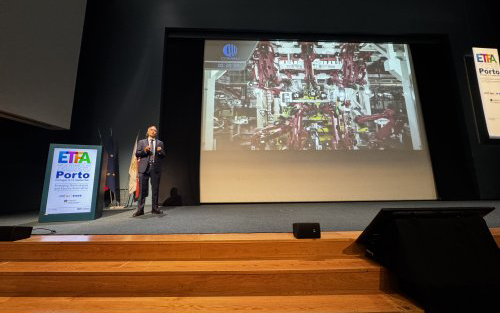
Comau recently revealed its artificial intelligence strategy for manufacturing. The presentation occurred at IEEE ETFA 2025 in Porto, Portugal. This major factory automation conference attracted global experts. Comau demonstrated how AI enhances robotic systems and control systems. Consequently, these innovations are transforming industrial automation.
Leveraging Industrial Heritage for AI Training
Giovanni Di Stefano presented Comau’s unique approach to AI development. He leads the company’s Advanced Robotics division. Comau utilizes fifty years of industrial automation data. This historical data trains neural networks effectively. Therefore, the company creates customized AI models for specific client needs. These models work across multiple sectors beyond automotive.
Proprietary AI Tools for Enhanced Robotics
Comau developed several innovative AI applications for manufacturing. These tools significantly improve robotic performance and design processes.
- Joint stiffness calculation algorithms ensure superior movement quality
- Automated design systems for welding gripper arms reduce development time
- MI.RA/OnePicker enables robots to handle diverse objects autonomously
- MI.RA/Thermography verifies welding quality in battery assembly
These AI solutions demonstrate advanced factory automation capabilities. For engineers working with robotic control systems and PLC integration, understanding these technologies is crucial. You can find compatible industrial automation components and technical specifications on PLCDCSHUB for similar implementations.
The Competitive Advantage of Customized AI
Comau emphasizes tailored artificial intelligence solutions. Companies gain significant market advantages through customization. They improve productivity without developing expensive new algorithms. Moreover, existing industrial data becomes a valuable asset. This approach makes advanced automation more accessible to various industries.
Industry Impact and Market Trends
The global AI in manufacturing market is experiencing rapid growth. According to MarketsandMarkets, this sector will reach $16.7 billion by 2027. Comau’s focus on practical AI applications positions them perfectly. Their solutions address real industrial challenges. These include quality control and flexible production systems.
Author’s Perspective: The PLCDCSHUB Analysis
From our viewpoint at PLCDCSHUB, Comau’s approach represents industry best practices. Their use of historical data for AI training is particularly insightful. Many companies overlook this valuable resource. Furthermore, their sector-agnostic strategy shows strategic wisdom. The integration of AI with traditional control systems and PLC networks creates powerful synergies. According to IEEE standards, such hybrid systems will dominate future factories.
Practical Implementation Scenarios
How can manufacturers implement similar AI automation solutions? Here are three practical application scenarios:
- Quality Verification Systems: Implement AI-powered vision systems for real-time welding inspection. This reduces defects in battery manufacturing and other precision industries.
- Flexible Material Handling: Deploy MI.RA/OnePicker for mixed-product assembly lines. This enables quick changeovers and reduces manual intervention.
- Predictive Maintenance: Use AI algorithms to monitor robotic joint performance. This prevents unexpected downtime in continuous production environments.
Frequently Asked Questions
How does Comau’s industrial heritage benefit AI development?
Fifty years of automation data provides real-world training material. This historical information helps create more accurate and reliable AI models for industrial applications.
What industries can benefit from Comau’s AI solutions?
While strong in automotive, these technologies apply to multiple sectors. These include food processing, pharmaceuticals, renewable energy, and logistics automation.
How does AI integration affect existing control systems?
Properly implemented AI enhances traditional PLC and DCS systems. It adds predictive capabilities and improves decision-making without replacing existing infrastructure.
Related Posts