Industrial Robot Installations Double in Global Manufacturing
Industrial Robot Installations Double as Automation Transforms Manufacturing
Global industrial robot installations reached record levels in 2024. Manufacturers worldwide accelerate automation investments. Robotics integration becomes essential for competitive manufacturing operations.
Record-Breaking Robot Installation Statistics
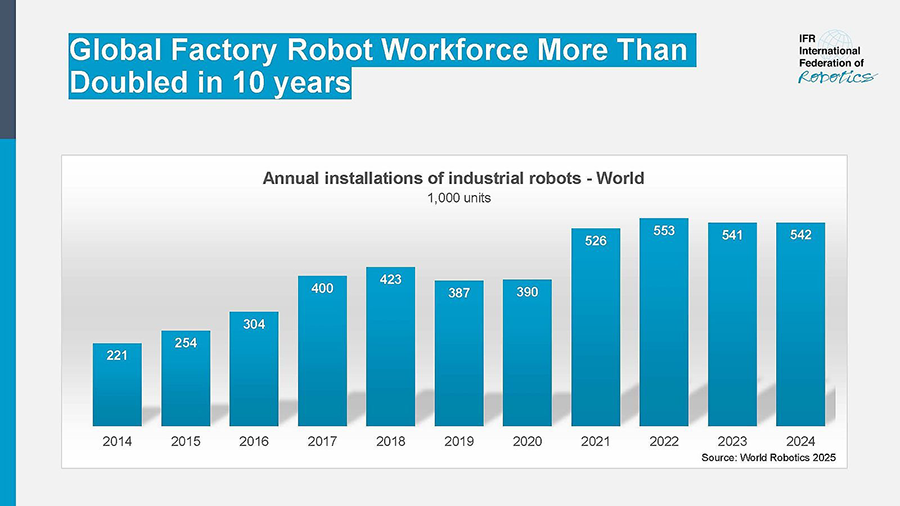
The World Robotics 2025 Report reveals impressive growth. Factories installed 542,000 robots during 2024. This number more than doubles the installation figures from 2014. Annual installations exceeded 500,000 units for the fourth consecutive year. The global operational robot stock reached 4.66 million units.
Regional Distribution of Industrial Robots
Asia dominates global robotics adoption with 74% market share. Europe follows with 16% of total installations. The Americas account for 9% of global robot deployments. These regional patterns reflect different automation maturity levels.
China’s Robotics Market Leadership
China maintains its position as the world’s largest robotics market. The country installed 295,000 industrial robots during 2024. This represents 54% of global robot deployments. Chinese manufacturers now lead their domestic market with 57% share. The operational robot stock surpassed 2 million units.
Asian Robotics Markets Overview
Japan remains the second-largest robotics market globally. The country installed 44,500 units during 2024. South Korea maintained fourth position with 30,600 installations. India achieved record installations with 9,100 units. The Indian automotive sector drove 45% of robot demand.
European Robotics Market Trends
European robot installations reached 85,000 units in 2024. This represents the second-highest historical level. Germany leads European markets with 26,982 installations. Italy follows with 8,783 units despite a 16% decrease. Nearshoring trends support continued European robot demand.
Americas Robotics Market Analysis
The Americas installed 50,100 industrial robots during 2024. The United States accounted for 68% of regional installations. Mexico maintained steady demand with 5,600 units. Canada experienced a 12% decline to 3,800 installations. Automotive investments drive robotics in North America.
Key Industries Driving Robot Adoption
Several manufacturing sectors lead robotics integration:
- Automotive manufacturing and component suppliers
- Electronics and semiconductor production
- Metal fabrication and machining operations
- Plastics and rubber manufacturing
- Food and beverage processing facilities
Integration with Industrial Control Systems
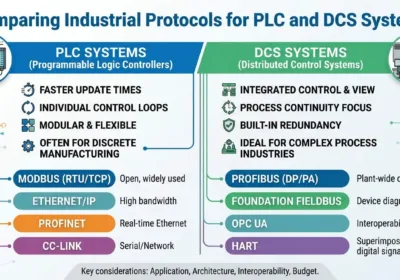
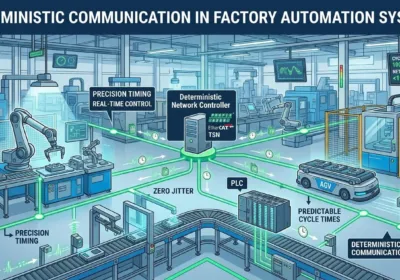
Modern robots require sophisticated control systems. PLC and DCS integration ensures seamless operation. Industrial networks connect robots to factory automation systems. These integrations enable coordinated production workflows. Proper implementation maximizes robotic system effectiveness.
Global Robotics Market Outlook
The IFR projects continued growth through 2028. Global installations should reach 575,000 units in 2025. The 700,000-unit milestone will be surpassed by 2028. Despite geopolitical challenges, long-term growth remains strong. According to MarketsandMarkets, the industrial robotics market will reach $75.3 billion by 2028.
PLCDCSHUB Expert Perspective
“Robotics integration requires careful control system planning. Manufacturers must consider PLC compatibility and network infrastructure. Our experience shows proper integration reduces implementation time by 40%. Robotics represents the future of competitive manufacturing.”
Implementation Best Practices
Successful robotics integration follows these steps:
- Conduct thorough production process analysis
- Select appropriate control system architecture
- Plan network infrastructure and safety systems
- Train maintenance and operations teams
- Develop continuous improvement protocols
Economic Benefits of Robotics Automation
Industrial robots deliver significant operational advantages:
- Increased production capacity and throughput
- Improved product quality and consistency
- Reduced labor costs in repetitive tasks
- Enhanced workplace safety for employees
- 24/7 operation capability with minimal downtime
Frequently Asked Questions
What industries benefit most from industrial robotics?
Automotive, electronics, and metal manufacturing see the highest returns. However, food processing and pharmaceuticals increasingly adopt robotics.
How do robotics integrate with existing automation systems?
Robots connect through PLC networks and industrial protocols. Proper integration ensures coordinated operation with other equipment.
What factors determine robotics implementation success?
Workforce training, system integration quality, and maintenance planning significantly impact long-term success and ROI.
Optimize your manufacturing operations with advanced automation solutions. Discover our industrial robotics and control system integration services at PLCDCSHUB for comprehensive automation support.
Related Posts