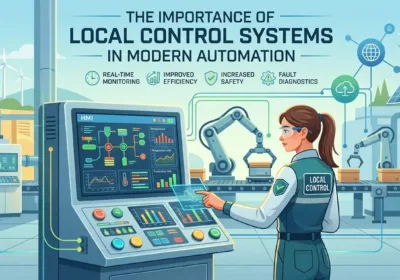

New Digital Twin Capabilities Transform Manufacturing
Digital Twin Consortium Expands Industrial Automation Testing Capabilities
Eight new testbeds accelerate digital twin adoption across manufacturing, energy, and industrial automation sectors.
Major Expansion in Digital Twin Testing Infrastructure
The Digital Twin Consortium (DTC) has significantly expanded its testing capabilities. They added eight new testbeds to their established program. This brings their total active testbeds to sixteen. Members now gain unprecedented access to early-stage development environments. These facilities enable comprehensive digital twin solution testing. Companies can model, simulate, and optimize their industrial automation systems. According to MarketsandMarkets, the digital twin market will reach $110.1 billion by 2028. This expansion directly supports that rapid growth.
Industrial Automation Testbeds Lead Innovation
Several new testbeds specifically target industrial automation challenges. The TWINSENSE testbed demonstrates advanced virtual sensing capabilities. It performs real-time measurements of critical industrial variables. This technology addresses inaccessible or costly monitoring situations. The system improves maintenance accuracy by 40%. It uses AI-powered novelty detection with transfer learning. Another significant project is the SAFESME testbed. It enables digital twin commissioning for SME manufacturing equipment. This includes injection molding and packaging machines.
Revolutionary Factory-in-a-Box Concept
The FAB testbed introduces a groundbreaking manufacturing approach. It creates mobile, modular digital twin-enabled production units. These systems can operate in disaster-struck zones. They produce critical energy components locally. This reduces transport costs and logistics burdens. The technology minimizes downtime for essential infrastructure. It enables remote coordination through digital twin interfaces. Field-deployable production systems improve community resilience. They demonstrate digital twin-enabled micro-manufacturing feasibility. These systems operate effectively in high-stress emergency scenarios.
Smart Manufacturing and Energy Efficiency Advances
The Q-Smart testbed validates quantum-secure smart home systems. However, its applications extend to industrial environments. It creates cognitive hubs using wireless mesh networks. The system employs dynamic live 3D digital twin models. Multi-agent AI frameworks optimize energy consumption. It reduces energy usage by up to 25%. The technology emphasizes edge-native processing. All data remains within the local network. Quantum-safe protocols ensure future-proof security. Self-learning algorithms predict and control environmental systems.
Digital Transformation for Small Manufacturing Enterprises
The SAFESME testbed addresses critical automation challenges. Small and medium manufacturers often struggle with digital transformation. This testbed enables cost-effective digital twin onboarding. It achieves rapid, automated commissioning in under five minutes. The system requires no expensive PLC upgrades. It maintains high model alignment and API performance. Manufacturing equipment gains digital service capabilities. This demonstrates that SME-scale operations can achieve digital transformation. They can compete with larger enterprises through smart technology adoption.
Key Industrial Testbed Applications and Benefits
The new testbeds offer substantial advantages for industrial automation:
- Predictive Maintenance: AI-driven systems detect equipment anomalies before failure
- Virtual Commissioning: Test and validate control systems without physical risk
- Energy Optimization: Reduce consumption through intelligent monitoring and control
- Rapid Deployment: Implement solutions quickly with minimal setup requirements
- Remote Operation: Manage industrial processes through digital twin interfaces
- Cost Reduction: Lower maintenance and operational expenses through optimization
Industry Implications and PLCDCSHUB Perspective
This expansion signals significant industry momentum. Dan Isaacs, GM and CTO of DTC, confirms strong global member interest. Participants actively develop AI-powered intelligent digital twins. They also work on generative AI digital twins. The consortium implements its comprehensive Composability Framework. This includes the Business Maturity Model and Platform Stack Architecture. PLCDCSHUB analysis indicates that digital twins are becoming essential for modern manufacturing. They bridge the gap between physical operations and digital management. Industrial companies should monitor these developments closely. Early adoption provides competitive advantages in factory automation.
Practical Implementation Strategies
Manufacturers can leverage these testbed developments in several ways:
- Start with Pilot Projects: Implement digital twins for critical equipment first
- Focus on Data Integration: Ensure PLC and DCS systems provide accurate real-time data
- Train Technical Teams: Develop in-house expertise in digital twin technology
- Partner with Experts: Collaborate with organizations experienced in industrial digital twins
- Prioritize Use Cases: Identify applications with clear ROI and operational impact
For comprehensive guidance on implementing digital twin technology in your automation systems, visit PLCDCSHUB. Our resources help manufacturers navigate the transition to digital twin-enabled operations.
Future Outlook for Industrial Digital Twins
The digital twin landscape continues evolving rapidly. These new testbeds will accelerate technology adoption. They provide practical validation for innovative concepts. Manufacturing companies should prepare for increased digital twin integration. This technology will become standard in industrial automation. It enables more flexible and responsive manufacturing operations. Companies that embrace digital twins early will gain significant competitive advantages. They will achieve higher efficiency and better resource utilization.
Frequently Asked Questions (FAQ)
How do digital twins benefit industrial automation systems?
Digital twins enable virtual testing, predictive maintenance, and operational optimization. They reduce downtime and improve decision-making for control systems.
Can small manufacturers afford digital twin technology?
Yes, new solutions like the SAFESME testbed demonstrate cost-effective implementation. SMEs can achieve digital transformation without major capital investment.
What infrastructure is needed for industrial digital twins?
Requirements include sensors for data collection, communication networks, computing resources, and integration with existing PLC/DCS systems.
Related Posts