IT/OT Convergence: Unlocking Data Value in Industrial Automation
Driving Efficiency Through IT/OT Convergence in Modern Industrial Automation
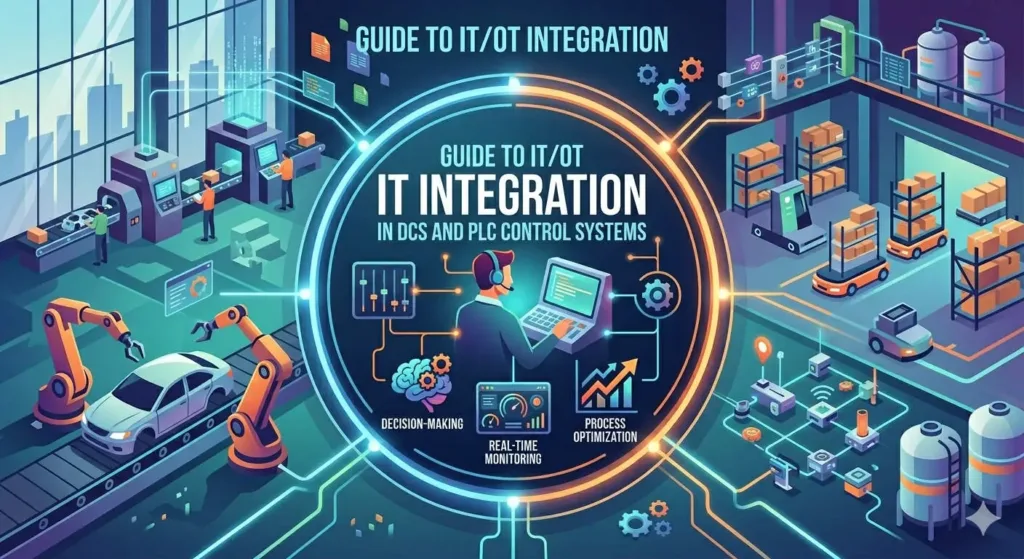
For decades, Information Technology (IT) and Operational Technology (OT) lived in separate worlds. IT managed enterprise data and cloud analytics. Meanwhile, OT handled the critical DCS and PLC systems on the factory floor. Today, this digital wall is crumbling. Modern industrial automation now demands real-time data flow between the boardroom and the boiler room.
At PLCDCS HUB, we observe that this shift is a practical necessity. Convergence enables predictive maintenance and data-driven decisions. However, merging these environments requires a deep understanding of both technical performance and operational safety risks.
The Strategic Value of Unified Control Systems
IT/OT convergence eliminates inefficient data silos between production and management. It allows operators to anticipate equipment failures using live process analytics. Instead of reacting to downtime, plants can optimize production cycles in real-time. This integration improves asset utilization across the oil, gas, and pharmaceutical sectors.
- ✅ Reduce unplanned downtime through advanced cloud-based analytics.
- ✅ Harmonize enterprise ERP data with real-time floor metrics.
- ✅ Maintain strict safety standards while increasing digital visibility.
Managing Network Latency in Deterministic Environments
OT environments depend on deterministic communication to maintain stable control loops. High latency can destabilize PID loops or disrupt batch process timing. Many plants mistakenly connect control systems directly to corporate networks. This often causes intermittent delays during peak IT traffic hours. Consequently, engineers must prioritize control traffic using Quality of Service (QoS) settings.
Protocol Compatibility and OPC UA Adoption
Modern IT systems prefer standardized protocols like OPC UA or MQTT. However, legacy factory automation equipment often relies on proprietary manufacturer languages. Protocol mismatches frequently lead to data loss or significant polling delays. We recommend verifying native OPC UA support before finalizing your integration architecture.
- ⚙️ Prioritize native protocol support to minimize conversion layers.
- ⚙️ Use robust protocol gateways only when legacy hardware requires them.
- ⚙️ Ensure high data integrity across all communication bridges.
Enhancing Cybersecurity Resilience for Control Networks
Connecting control systems to IT networks expands the potential attack surface. A breach in the OT layer can halt production or compromise life-safety systems. Many legacy controllers lack built-in authentication or encryption. Therefore, engineers should follow the IEC 62443 guidelines for industrial cybersecurity. Effective network segmentation and strict access controls are essential defenses.
Best Practices for Installation and Maintenance
Successful convergence requires a layered network structure. A flat network architecture is the most common mistake in modern plants. Always deploy an Industrial DMZ between the enterprise and control layers. Furthermore, manage patch cycles carefully to avoid unexpected controller reboots.
- 🔧 Use managed industrial switches to isolate critical traffic.
- 🔧 Implement single-point grounding to prevent EMI signal noise.
- 🔧 Test all security patches in a staging environment first.
Application Scenario: Refining Data Visibility
A major refinery recently integrated its legacy Honeywell DCS with a cloud analytics platform. By deploying a secure Industrial DMZ, they safely pushed process data to the enterprise level. This allowed engineers to identify a failing pump three days before a potential breakdown. If you need specialized hardware for your next integration project, visit PLCDCS HUB Limited for expert-grade components.
Expert Buyer FAQ
Is my current hardware ready for full IT/OT integration?
Evaluate if your hardware supports modern protocols like MQTT or OPC UA. If your system lacks built-in logging or user authentication, consider adding security middleware or a partial upgrade.
Should I integrate legacy systems or replace them entirely?
If your equipment is over 15 years old, a phased upgrade is usually better. Forcing integration on outdated hardware often creates excessive maintenance costs and latency issues.
How can I protect my production line from IT-based updates?
Maintain a strict “Air-Gap” or DMZ policy. Ensure the IT team cannot push automated updates directly to the control layer without a manual verification process in a test environment.
This article was contributed by the engineering team at PLCDCS HUB, specialists in high-performance industrial control solutions.