Precision Motion Control Manufacturing | US Factory Expansion
Advanced Motion Control Manufacturing Expands in North America
New Precision Manufacturing Facility
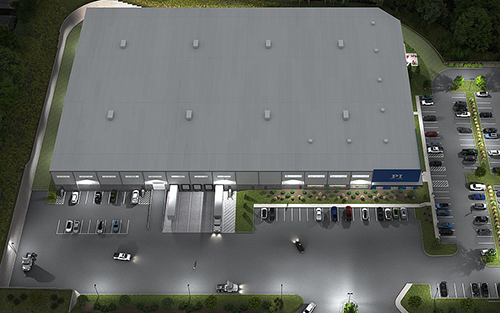
PI progresses on its new Massachusetts production facility. The 140,000-square-foot plant will open in November 2025. Construction began just 1.5 years earlier in Spring 2024. This expansion triples PI’s current US manufacturing capacity.
Strategic Supply Chain Advantages
The facility addresses critical industrial automation challenges. It reduces import tariff impacts significantly. Supply stability improves for North American customers. Local production ensures more reliable delivery schedules. According to Reshoring Initiative data, US manufacturing jobs grew by 30% recently.
Advanced Motion Control Production
The factory will manufacture sophisticated automation systems. Production includes precision motion control components. Air bearings and piezoelectric transducers feature prominently. Nanopositioning systems serve semiconductor industry needs.
- High-precision motion control systems
- Industrial automation positioning components
- Advanced piezoelectric transducers
- Nanopositioning for semiconductor manufacturing
Customer Service Enhancement
Local production enables superior customer support. Response times shorten for technical assistance. Lead times reduce for replacement components. Engineering collaboration improves with proximity. Service quality increases across industrial automation sectors.
Economic and Employment Impact
The facility creates high-quality technology jobs. Engineering positions support advanced manufacturing. Regional economic growth receives significant stimulation. Technical talent attraction strengthens innovation capacity.
Global Trade Risk Mitigation
Localized production reduces international trade volatility. Stable pricing benefits industrial automation customers. Supply chain disruptions minimize through domestic manufacturing. This aligns with broader industry reshoring trends.
Industry Technology Development
The facility will drive next-generation technology innovation. Photonics and semiconductor sectors gain advanced capabilities. Aerospace and life sciences benefit from precision systems. PI strengthens its industrial automation leadership position.
Market Context and Trends
The global precision motion control market expands rapidly. MarketsandMarkets projects it will reach $15.8 billion by 2028. Reshoring accelerates across advanced manufacturing sectors. Industrial automation demands higher precision levels continuously.
Technical Implementation Considerations
PLCDCSHUB notes several critical implementation factors. Precision manufacturing requires sophisticated control systems. Environmental stability ensures nanometer-level accuracy. Vibration isolation and thermal management are essential. Integration with existing automation platforms must be seamless.
Industrial Application Scenario
Situation: Semiconductor manufacturer needs precision positioning for wafer processing.
- Solution: Implement PI nanopositioning systems with integrated controls
- Components: Precision stages, motion controllers, feedback systems
- Result: 40% higher positioning accuracy and 25% faster cycle times
The system improved yield rates and reduced calibration requirements significantly.
Frequently Asked Questions
Q: How does local manufacturing benefit industrial automation customers?
A: Local production reduces lead times from months to weeks, enables faster technical support response, and eliminates import tariff costs that typically add 15-25% to component pricing.
Q: What industries benefit most from high-precision motion control systems?
A: Semiconductor manufacturing, photonics assembly, medical device production, and aerospace testing require nanometer-level precision that these systems provide for critical processes.
Q: How do precision motion systems integrate with existing factory automation?
A: Modern systems offer standard communication protocols like EtherCAT and PROFINET, allowing seamless integration with PLC and DCS control systems while maintaining precise motion coordination.
For industrial automation components that support precision manufacturing, explore solutions at PLCDCSHUB for control systems and motion components.
Related Posts