Professional Pressure Measurement for Industrial Control
The Wisdom of Correct Pressure Measurements
Accurate Pressure Measurement Strategies for Industrial Automation
Understanding Pressure Measurement Challenges
Process industries rely heavily on pressure measurements. Pumps and compressors need accurate monitoring. However, installation errors cause significant problems. Downstream pressure sometimes exceeds upstream readings. These discrepancies confuse process engineers. Therefore, proper installation becomes critical for reliability.
Transmitter Elevation Impact on Readings
Pressure transmitter height affects measurement accuracy. Liquid-filled tubing creates additional pressure. This liquid head causes false high readings. Conversely, elevated transmitters face condensation issues. Condensate fills tubing and distorts values. Proper elevation alignment ensures correct measurements.
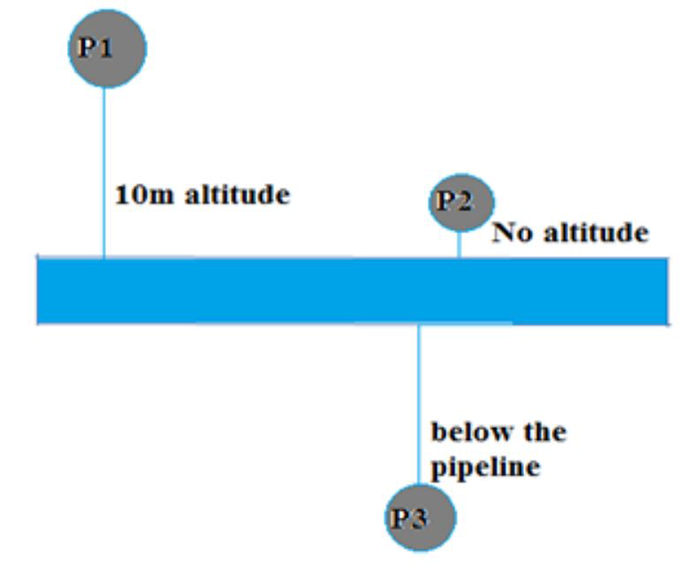
Figure 1: Three different pressure transmitters at different heights referenced to the pipeline.
Fluid Momentum Effects on Sensors
High-velocity fluids impact pressure sensor accuracy. Taps placed near nozzles capture dynamic pressure. This measures both static and momentum pressure. Consequently, readings appear higher than actual values. Compressor knock-out drums show this effect. Distillation columns also experience similar issues.
Pipeline Elbow Installation Mistakes
Elbow installations cause significant measurement errors. Fluid momentum increases at pipeline bends. Pressure sensors here capture total pressure. Therefore, they show artificially high readings. Upstream and downstream positions provide better accuracy. Proper placement avoids velocity head miscalculations.
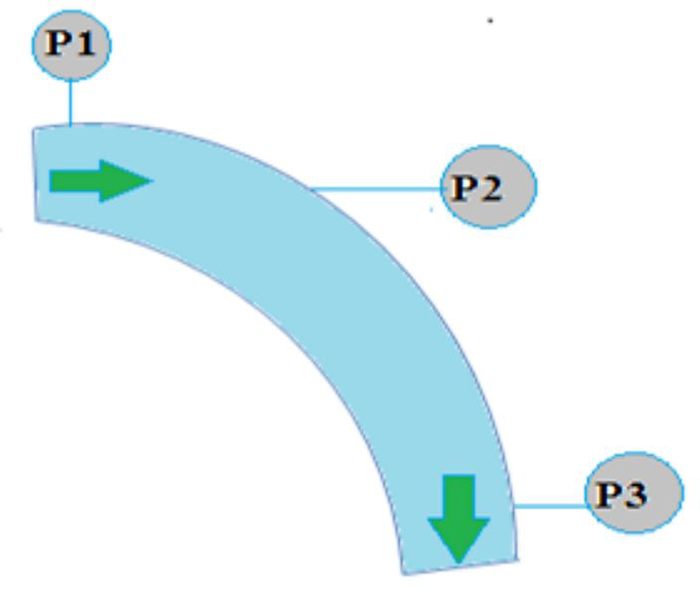
Figure 2: The first pressure sensor is implanted upstream of the elbow, the second on the elbow and the third downstream of the elbow. P2 will have a higher reading than P1 and P3.
Vessel Versus Pipeline Mounting
Pressure transmitter location affects control accuracy. Pipeline-mounted sensors read flow-induced pressures. Vessel-mounted sensors measure true static pressure. Nitrogen blanketing systems require vessel mounting. This ensures proper pressure control valve operation. Direct vessel installation prevents control instability.
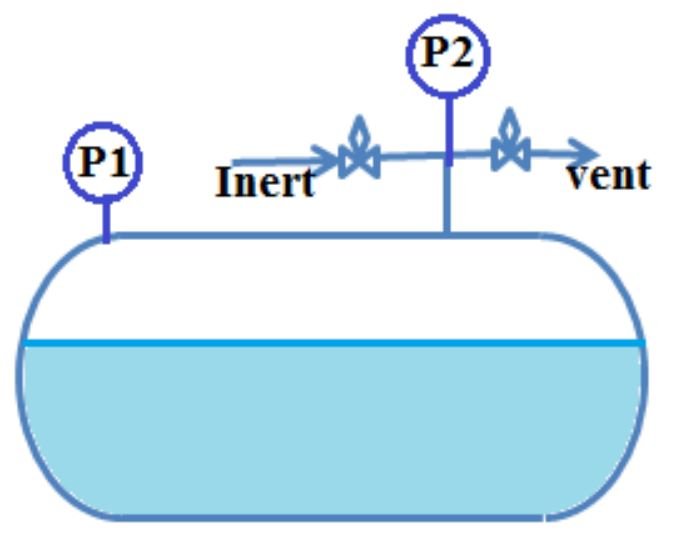
Figure 3: A pressure transmitter is fitted to maintain pressure in a vessel and pressure is maintained in the vessel using a PIC controller or PCV.
Flow Development Considerations
Fully developed flow ensures accurate measurements. Boundary layer development affects velocity profiles. Pressure sensors need stable flow conditions. The 10D rule (10 pipe diameters) provides guidance. Installation after mixing points requires this distance. This practice guarantees representative static pressure readings.
Handling Challenging Process Materials
Problematic materials require special considerations. Heavy tar and coke deposit in tubing. Slurry services plug pressure sensors. Remote seal systems offer effective solutions. They minimize direct material contact. However, diaphragm fouling remains a concern. Regular maintenance prevents measurement failures.
External Flushing System Management
Flushing systems clear deposited materials. Steam and nitrogen serve as common media. However, high flush rates cause problems. They create low-pressure zones at diaphragms. This leads to incorrect pressure readings. Flow monitoring ensures proper flushing rates.
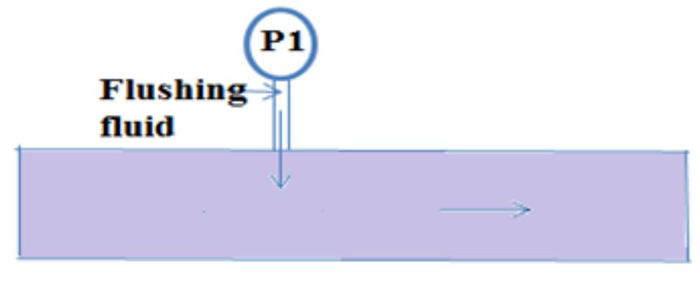
Figure 4: Flushing fluid injection.
Pipeline Geometry Effects
Pipeline expansions affect pressure measurements. Bernoulli’s principle explains this phenomenon. Expanding areas convert kinetic energy to pressure. Downstream sensors read higher than upstream. This occurs despite no external energy addition. Understanding this principle prevents misinterpretation.
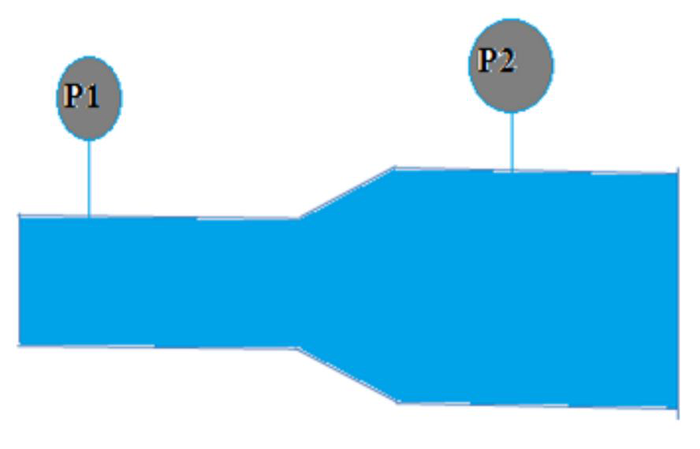
Figure 5: Pressure sensor after expander.
Two-Phase Flow Complications
Condensing vapors create measurement challenges. Heat loss causes partial vapor condensation. This reduces flow velocity slightly. Consequently, pressure increases downstream. This seems counterintuitive but follows physical principles. Recognition of this effect prevents unnecessary transmitter replacement.
Expert Recommendations for Reliable Measurements
From PLCDCSHUB’s experience, pressure measurement requires systematic approach. Proper installation prevents most common problems. Consider these critical implementation guidelines:
- Use siphon tubes for high-temperature services
- Calibrate for wet/dry leg conditions appropriately
- Avoid elbow installations and momentum effects
- Implement regular tubing inspection schedules
- Follow 10D rule for flow development distance
- Mount sensors directly on vessels not pipelines
- Select remote seals for corrosive services
- Monitor and control flushing flow rates
- Verify vapor phase installation in columns
Practical Implementation Scenarios
Consider these real-world application examples:
- Distillation Column Pressure Control: Install transmitters in vapor spaces only. Avoid downcomer locations completely. Verify during design phase.
- Pump Suction Pressure Monitoring: Mount sensors directly on suction drums. Ensure proper NPSH measurement for pump protection.
- Steam System Pressure Control: Implement siphon tubes and liquid-filled systems. Prevent steam condensation errors in readings.
- Slurry Service Applications: Use remote seals with compatible flush fluids. Establish regular maintenance schedules.
Industry Perspective and Future Trends
Modern pressure measurement integrates with control systems. Smart transmitters communicate with PLC and DCS platforms. They provide diagnostic data beyond basic measurements. According to industry reports, the global pressure sensor market will exceed $15 billion by 2026. This growth emphasizes technology importance. For specific automation component selection, visit PLCDCSHUB for technical guidance and product information.
Frequently Asked Questions (FAQ)
- How does transmitter elevation affect pressure readings? Elevation differences create liquid head pressure. This adds to or subtracts from actual process pressure depending on relative position.
- Why avoid elbow installations for pressure sensors? Elbows capture dynamic pressure components. This results in artificially high readings that don’t represent true static pressure.
- What’s the advantage of remote seal pressure transmitters? Remote seals isolate sensors from process fluids. This prevents clogging and corrosion in challenging applications.