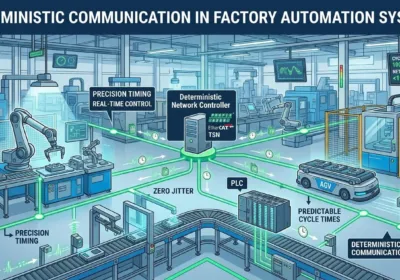

Real-Time Data Strategies for Manufacturing Productivity
Transforming Real-Time Manufacturing Data into Operational Excellence
Modern manufacturing facilities generate massive amounts of operational data daily. However, research reveals that 46% of manufacturers face significant data integration challenges. These barriers prevent effective automation implementation and productivity improvement.
The Manufacturing Data Dilemma
UK manufacturers recognize the importance of real-time data. Approximately 74% consider it essential for operations. Despite this recognition, many struggle to implement effective data strategies.
The core challenge involves data selection and processing speed. Manufacturers must identify critical datasets from numerous available sources. Then they need to process this information quickly and accurately.
Edge Computing Solutions for Immediate Processing
Edge computing addresses latency and bandwidth concerns effectively. This technology processes time-sensitive data near the source. Local processing reduces dependency on cloud infrastructure.
Key benefits of edge computing include:
- ✅ Reduced Latency: Enables immediate response to machine alerts
- ⚙️ Bandwidth Optimization: Lowers data transmission costs significantly
- 🔧 Localized Control: Keeps critical operations within facility boundaries
- 🤖 Enhanced Security: Maintains sensitive data on-premises
Implementing Smart Data Filtering Strategies
Successful manufacturers prioritize targeted data collection over comprehensive capture. They focus on high-value information that drives immediate action. This approach eliminates data overload and reduces storage costs.
Engineering teams can transition from reactive to predictive maintenance. Supply chain managers achieve better inventory optimization. Operations leaders gain accurate real-time performance visibility.
Building Resilient Digital Infrastructure
Modern manufacturing requires robust network architecture. Secure, high-performance networks support sensor-to-action workflows. Distributed platforms like Pulsant’s platformEDGE enable localized processing.
This infrastructure maintains data governance and compliance standards. It also ensures operational continuity during internet disruptions. Furthermore, it supports ISO 27001 and industry-specific regulations.
Author’s Insight: Strategic Data Management
From PLCDCSHUB’s perspective, data relevance consistently outperforms data volume. Manufacturers should focus on actionable insights rather than comprehensive data collection. This approach delivers faster ROI and operational improvements.
Effective implementation requires integrating edge computing with existing industrial automation systems. Properly configured PLCs and control systems can filter and prioritize data at the source. This reduces downstream processing requirements.
Practical Implementation Framework
Manufacturers can follow this structured approach to optimize data utilization:
- Identify critical machines and processes for monitoring
- Install edge computing devices near data sources
- Configure data filtering rules based on operational priorities
- Establish real-time alert protocols for abnormal conditions
- Integrate edge systems with central monitoring platforms
Measurable Business Outcomes
Companies implementing smart data strategies achieve significant improvements. They typically experience 20-30% reduction in unplanned downtime. Maintenance costs decrease by 15-25% through predictive approaches.
Overall equipment effectiveness often improves by 10-15%. Inventory carrying costs reduce through better supply chain visibility. These metrics demonstrate the tangible value of optimized data utilization.
Frequently Asked Questions (FAQ)
Q: How does edge computing differ from cloud computing in manufacturing?
A: Edge computing processes data locally near machines, while cloud computing uses remote servers. Edge provides faster response for time-critical operations, while cloud offers scalable storage and analysis.
Q: What types of manufacturing data provide the most value?
A: Machine performance metrics, quality control data, energy consumption, and supply chain information deliver the highest ROI. These datasets directly impact operational efficiency and product quality.
Q: How can small manufacturers implement real-time data strategies cost-effectively?
A: Start with critical equipment monitoring using affordable IoT sensors. Use open-source platforms for data analysis. Focus on specific high-return applications before expanding system-wide.
Related Posts