Schneider Momentum Processor vs Adapter: Key Differences Explained
Functional Roles in Distributed I/O Architectures
In the world of industrial automation, the Schneider Electric Momentum series stands out for its unique modular architecture. Many engineers ask if Momentum Processors and Communication Adapters are interchangeable. The short answer is no. While they share a physical footprint, their internal logic and system roles differ significantly. At PLCDCS HUB, we believe that understanding these distinctions is vital for maintaining high-performance control systems.
The Momentum Processor acts as the “brain” of a standalone or distributed node. It executes complex IEC 61131-3 logic and manages local I/O scanning independently. Conversely, a Communication Adapter serves as a “bridge” only. It lacks internal logic capabilities and simply reports data to a supervisor PLC or DCS. Consequently, substituting one for the other will disrupt the entire control strategy.

Protocol Compatibility and Network Design
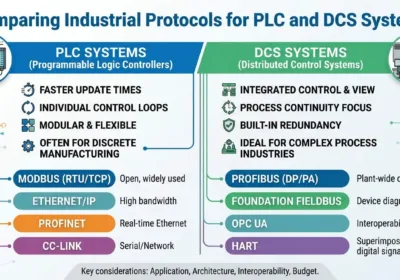
Adapters are purpose-built for specific networking standards like Modbus TCP, EtherNet/IP, or Profibus DP. They allow factory automation systems to integrate with various third-party controllers. Processors, however, prioritize local determinism and scan cycle stability. Therefore, choosing the wrong module can cause initialization failures. Most modern oil and gas deployments rely on these processors for local fallback logic during network outages.
Industry Trends in Modular Hardware
As industrial automation shifts toward Edge computing, the role of the intelligent processor is expanding. Industry reports from 2024 suggest that 65% of process plants now prefer local processing at the I/O level to reduce network latency. The Momentum Processor fulfills this need perfectly. However, if your architecture relies on a centralized high-performance controller, a simple Communication Adapter is more cost-effective.
Practical Field Engineering Advice
From our experience at PLCDCS HUB, many site failures stem from firmware mismatches during module replacement. When you install a new processor, you must verify compatibility with EcoStruxure Control Expert. Furthermore, processors often require more stable 24VDC power than simple adapters. In high-noise environments like chemical plants, we recommend adding external surge protection to prevent logic corruption.
Technical Essentials Checklist
Identify the Node Role: Use Processors for local logic; use Adapters for remote data.
Verify Protocol Support: Ensure the Adapter matches the host network (e.g., Modbus vs. Profibus).
Power Supply Stability: Processors require clean 24VDC power for reliable operation.
Firmware Synchronization: Match module firmware with your specific engineering software version.
Environmental Protection: Utilize shielded cables in high-interference VFD cabinets.
Application Scenarios and Solutions
Remote Pump Stations: Use a Momentum Processor to maintain local control if the main fiber link fails.
Conveyor Systems: Deploy Communication Adapters for cost-effective integration into a centralized PLC network.
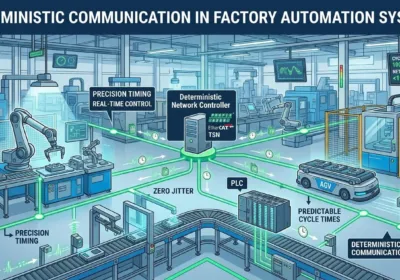
Chemical Batching: Implement Processors to ensure deterministic I/O timing for safety-critical ingredient mixing.
If you are looking for genuine Schneider Electric components or need expert technical guidance on your next project, visit PLCDCS HUB Limited for premium hardware and support.
Frequently Asked Questions (FAQ)
Can I convert a Communication Adapter into a Processor via firmware?
No, the hardware internals are fundamentally different. A Communication Adapter lacks the CPU and memory resources required to execute user-defined logic programs.
Which module is better for a high-vibration environment?
Both modules share the same mechanical housing, but the Processor is more sensitive to electrical noise. We recommend using the Processor only when local intelligence is mandatory for the application.
How do I choose between an M1 Processor and an M1E Processor?
The choice depends on your communication needs. M1E processors include integrated Ethernet ports, making them ideal for modern I/O architectures. Standard M1 processors are better suited for legacy Modbus serial applications.
Related Posts