
Sonair’s 3D Ultrasound Sensors Revolutionize Industrial Robot Safety
Sonair’s $6M Funding Accelerates Safer Industrial Automation with 3D Ultrasound
Market Need for Safe Human-Robot Collaboration
The global warehouse automation market will reach $41.5 billion by 2030. This growth demands safer human-robot interaction. Sonair’s ADAR sensor technology meets this critical need. It enables secure robot operation alongside human workers.
Breakthrough in Robotic Sensing Technology
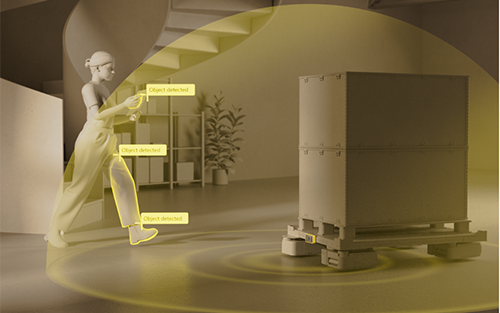
Sonair’s ADAR sensor advances industrial automation significantly. This technology uses acoustic detection for precise 3D perception. It provides full vertical views with minimal computational needs. The system now ships to manufacturers across three continents.
Safety Certification and Industry Standards
The company achieved PLd ISO13849 and SIL IEC 61508 certification. This marks a first for 3D ultrasonic sensing technology. Manufacturers can therefore integrate ADAR into control systems confidently. The certification required extensive testing and validation.
Strategic Funding for Global Expansion
Sonair secured $6 million from international investors. Scale Capital and Investinor led this funding round. Existing investors increased their commitments substantially. This financial support enables rapid market expansion worldwide.
Cost Advantage Over Traditional Sensing
ADAR technology offers significant cost savings versus LiDAR. It delivers similar 3D perception at a fraction of the price. This makes advanced safety features more accessible. Industrial automation systems gain reliable safety sensors affordably.
Real-World Applications and Customer Validation
- FUJI CORPORATION uses ADAR for retail environment robots
- European manufacturer implements sensors for cleaning robots
- Over 30 global companies completed successful testing
- Multiple industries validate the technology’s effectiveness
Industry Expert Perspectives
Investors highlight Sonair’s rapid progress from patents to products. Scale Capital praised the technology’s simplicity and effectiveness. Investinor emphasized essential safety requirements for robotics. T|Y|R.vc recognized dual-use potential across sectors.
Technical Innovation in Factory Automation
Sonair’s patented ultrasound enables safer PLC integration. The sensors provide real-time spatial awareness for automation. This capability is crucial for modern factory environments. The technology reduces complexity while maintaining safety standards.
Future Outlook for Autonomous Systems
The autonomous mobile robot market will hit $15.6 billion by 2030. Labor shortages and safety regulations drive robotics adoption. Sonair’s technology positions it for significant market capture. Their approach balances safety with practical implementation costs.
Practical Implementation Considerations
For industrial automation engineers, ADAR offers key advantages:
- Simple integration with existing control systems
- Reduced computational load on main processors
- Compliance with international safety standards
- Cost-effective safety for autonomous operations
Author Insight from PLCDCSHUB
Specialized safety sensors like ADAR represent an important automation trend. PLCDCSHUB experts state, “Modern control systems need reliable perception capabilities. Sonair’s approach enhances traditional PLC and DCS architectures. Automation professionals must understand these sensor technologies.”
Manufacturers should evaluate such technologies for their automation strategies. The PLCDCSHUB team provides expert control system guidance. Visit PLCDCSHUB to explore industrial automation solutions.
Application Scenario: Warehouse Automation
In warehouse settings, ADAR-equipped robots can:
- Detect human workers in shared spaces
- Navigate safely around obstacles and people
- Maintain efficiency while ensuring safety
- Reduce workplace injury risks substantially
Frequently Asked Questions
How does ADAR compare to traditional safety sensors?
ADAR provides 3D perception like LiDAR but costs less. It uses ultrasound designed for human-robot collaboration.
What industries benefit from this technology?
Logistics, manufacturing, healthcare, and commercial cleaning sectors benefit most. Any human-robot environment gains advantages.
How does this impact control system design?
The technology simplifies safety implementation. It reduces computational burden while providing reliable detection.
Related Posts


