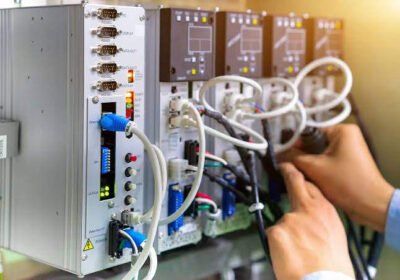
MTL5021, MTL5024, MTL5025 Controllers: Hazardous Area Guide
MTL5000 Series Hazardous Area Controllers: The Ultimate Guide to Selection and Application
In industrial automation, safety in explosive atmospheres is non-negotiable. The MTL5000 series from Eaton are critical components for protecting PLC and DCS systems in hazardous areas (Zones 1, 2, 21, 22). This guide explores the MTL5021, MTL5022, MTL5024, MTL5025, and MTL5061, detailing their functions and ideal use cases.
Core Functions and Operating Principles
These devices are intrinsic safety (IS) barriers. They limit energy to field devices. This prevents ignition in hazardous areas. They sit between safe-area control systems and field instruments. Therefore, they are essential for system integrity.
- ✅ Energy Limitation: They restrict current and voltage to safe levels.
- ✅ Signal Conditioning: Many models convert and isolate signals.
- ✅ Ground Reference: They provide a stable earth connection for the IS loop.
A MarketsandMarkets report predicts the functional safety market to reach $8.2 billion by 2026. This growth underscores their importance.
Detailed Model Analysis and Selection Guide
Choosing the correct model ensures safety and performance. Here is a breakdown of each unit’s role.
MTL5021 and MTL5022: Analog Signal Controllers
The MTL5021 is a single-channel isolator. It typically handles 4-20mA input signals. The MTL5022 offers similar analog control. It often provides an additional alarm relay function. Both are workhorses for standard process loops.
MTL5024 and MTL5025: Digital and Power Interfaces
The MTL5024 is a digital input conditioner. It interfaces with switches and digital sensors in hazardous zones. In contrast, the MTL5025 is a power driver. It controls loads like solenoid valves. This makes it vital for actuation.
MTL5061: Specialized Fire and Gas Detection
The MTL5061 is a dedicated barrier for fire detection systems. It powers and monitors detectors. It ensures failsafe operation for critical safety instrumented systems (SIS).
Key Application Scenarios in Industry
These controllers find use across various high-risk sectors.
- ⚙️ Oil & Gas: Protecting control loops on offshore platforms and refineries.
- ⚙️ Chemical Processing: Isolating signals in reactor and distillation column control.
- ⚙️ Pharmaceuticals: Safeguarding instrumentation in solvent handling areas.
- ⚙️ Power Generation: Providing safety in coal mills and fuel handling zones.
Author’s Insight and Commentary
From PLCDCSHUB’s experience, a common oversight is neglecting the MTL5025 for valve control. Engineers often focus on signal barriers. However, the power driver is equally critical for complete safety loops. Moreover, the trend is moving towards smart, diagnostic-capable barriers. While the classic MTL5000 series remains robust, future-proofing designs with communication-enabled devices is wise.
Practical Solutions and Implementation Case
Scenario: Upgrading a tank level control system in a Zone 2 area.
- Assessment: A level transmitter outputs a 4-20mA signal. A solenoid valve controls inflow.
- Solution: Use an MTL5021 for the transmitter signal. Use an MTL5025 to drive the solenoid valve.
- Result: The PLC in the safe area receives a clean signal. It safely commands the valve in the hazardous area. The system complies with IEC 60079 standards.
Frequently Asked Questions (FAQ)
Q: Can I use a standard power supply with an MTL5061 fire detection barrier?
A: No, you must use an approved associated apparatus or galvanically isolated power supply rated for the system. Using a non-compliant supply can compromise the intrinsic safety certification and create a serious hazard.
Q: In a retrofit project, how do I know if my existing MTL5022 units are still compliant?
A: First, check the calibration date and certification documents. We at PLCDCSHUB often advise a full functional test. Environmental damage or outdated certifications may require replacement to meet current site safety standards.
Q: What’s the primary practical difference during commissioning between the MTL5024 and MTL5025?
A: The key difference is load testing. For the MTL5024 (digital input), you’ll simulate a contact closure. For the MTL5025 (power driver), you must test under the actual load current of the solenoid or lamp. Always verify the voltage drop across the loop is within specifications.
For detailed specifications, competitive pricing, and technical support for the entire MTL5000 series, visit PLCDCSHUB Limited. Their expertise and large stock ensure you get the right hazardous area controller for your project.