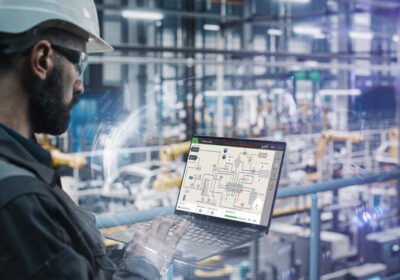

HART Communication & Safety Isolation Solutions for PLC Systems

Essential MTL Signal Isolators for Robust Industrial Automation Systems
Industrial control systems consistently face harsh electrical environments. Therefore, signal isolators provide critical protection against noise and surges. Consequently, they ensure PLC and DCS reliability in demanding applications. Moreover, proper selection significantly enhances overall system safety and accuracy.
Understanding Signal Isolation Technology
Fundamentally, signal isolators create electrical separation between circuits. As a result, this prevents dangerous ground loops and voltage transients. Furthermore, modern devices utilize advanced galvanic isolation techniques. Consequently, these methods protect sensitive control equipment effectively and reliably.
- ✅ Galvanic isolation prevents dangerous voltage transfer
- ✅ Additionally, signal conversion maintains process accuracy
- ✅ Specifically, intrinsic safety protection is for hazardous areas
- ✅ Finally, noise immunity ensures reliable data transmission
Key MTL Isolator Models and Applications
MTL5049 Dual-Channel Signal Isolator offers high-density analog isolation. Moreover, this compact device handles multiple signal types simultaneously. Therefore, it’s ideal for space-constrained control panels requiring reliable isolation.
MTL5043 HART Communication Isolator supports digital HART protocol transmission. Consequently, this enables smart instrument diagnostics while maintaining analog accuracy. Thus, it’s essential for modern process plants using intelligent field devices.
MTL5032 Industrial Pulse Isolator processes frequency and tachometer signals. Specifically, this specialized device ensures accurate pulse counting from flow meters. Furthermore, it provides excellent noise immunity for rotational speed monitoring.
MTL5031 Hazardous Area Conditioner delivers intrinsic safety protection. As a result, this certified barrier limits energy to safe levels in explosive atmospheres. Hence, it’s fundamental for Zone 0/1 installations requiring guaranteed safety.
MTL5014 Switch Controller monitors digital inputs in hazardous locations. Additionally, this device interfaces with emergency stops and safety switches. Therefore, it provides reliable isolation for critical shutdown circuits.
Selection Criteria and Technical Differentiation
Choosing the correct isolator requires careful analysis. For this reason, consider these critical factors for optimal selection:
- ⚙️ Signal Type: Analog, digital, HART, or pulse signals
- ⚙️ Safety Requirements: Furthermore, hazardous area certification is often needed
- ⚙️ Channel Density: Similarly, single versus dual-channel configurations matter
- ⚙️ Mounting Constraints: Likewise, DIN rail space availability is crucial
- ⚙️ Environmental Conditions: Finally, temperature range affects performance
Practical Implementation Scenarios
Chemical Processing Plant Solution:
A batch reactor system uses multiple temperature sensors with HART capability. Therefore, engineers install MTL5043 isolators between sensors and the DCS. Consequently, this configuration allows remote calibration while eliminating ground loop issues. Moreover, the setup improves maintenance efficiency by 40% according to plant records.
Water Treatment Facility Application:
A pumping station monitors flow rates using turbine meters. Subsequently, the MTL5032 pulse isolators condition signals over long cable runs. As a result, this prevents signal degradation and ensures accurate totalization. Furthermore, the system maintains ±0.5% measurement accuracy in challenging conditions.
Expert Analysis and Industry Perspective
From PLCDCSHUB’s experience, proper isolator selection impacts long-term reliability. In fact, many system failures originate from inadequate signal conditioning. According to MarketsandMarkets, the industrial automation market will reach $306 billion by 2027. Consequently, this growth increases demand for robust isolation solutions.
Currently, modern trends favor integrated devices with diagnostics. However, dedicated isolators like MTL models offer superior protection. Additionally, they comply with IEC 61010 standards for measurement equipment. Therefore, always verify ATEX or IECEx certifications for hazardous area applications.
Frequently Asked Questions
Q: How often should signal isolators be calibrated in typical service?
A: Most MTL isolators maintain stability for 3-5 years in normal conditions. However, critical applications may require annual verification. Furthermore, environmental factors like temperature extremes can affect calibration intervals.
Q: Can these isolators handle vibration in heavy industrial environments?
A: Yes, MTL isolators are designed for industrial environments. Specifically, they typically withstand vibration up to 2g (20 m/s²) at 10-150 Hz. Nevertheless, for extreme vibration areas, additional mounting considerations may be necessary.
Q: What’s the typical installation time for a rack of 16 isolators?
A: An experienced technician can install and wire 16 DIN-rail mounted isolators in 2-3 hours. This includes termination, labeling, and basic functional testing. Moreover, pre-wired assemblies can reduce this time significantly.
Professional Recommendations
Always document isolator installation locations and specifications. Additionally, create a maintenance schedule based on your plant’s environmental conditions. Finally, consider future expansion needs when selecting channel density.
For technical specifications and competitive pricing, visit PLCDCSHUB Limited. Our inventory includes genuine MTL products with full manufacturer support. Moreover, contact our engineering team for application-specific guidance.