
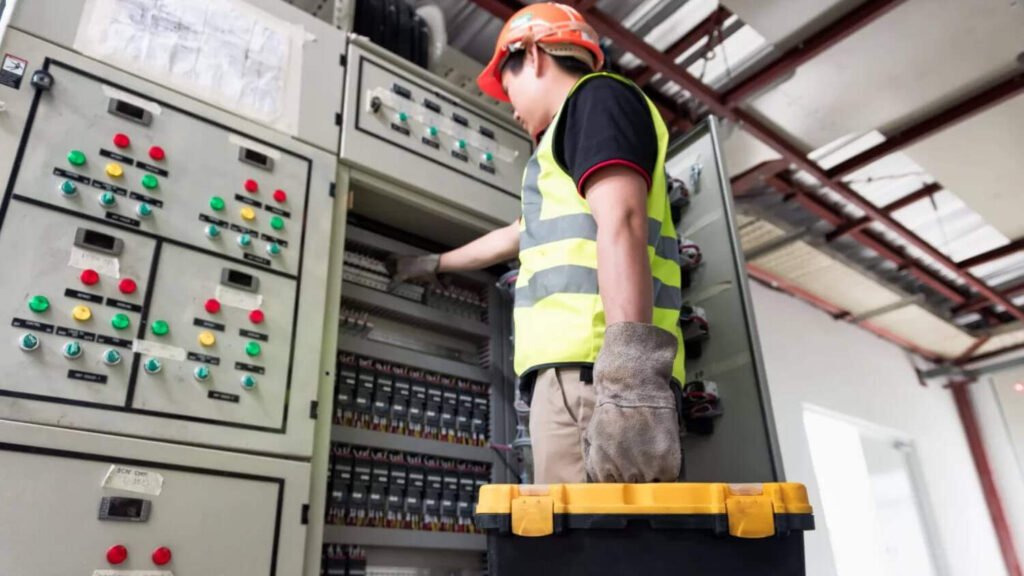
Triconex 3700A Diagnostics: Reducing MTTR in Safety Systems
Precision Troubleshooting Through Per-Point Status Awareness
In high-stakes industries like oil and gas or chemical processing, downtime is more than an inconvenience; it is a massive financial and safety risk. The Triconex 3700A input module, when paired with TriStation 1131 software, offers a sophisticated remote diagnostic suite. This setup allows engineers to pinpoint channel-level faults without entering the field or opening hazardous area cabinets. Consequently, maintenance teams can significantly reduce Mean Time To Repair (MTTR) while strictly adhering to SIL-rated safety protocols.
The 3700A module excels at identifying specific failure modes for every individual channel. Through the TriStation 1131 interface, users can immediately see if a fault stems from an open circuit, a short, or an out-of-range signal. In my experience at PLCDCS HUB, many “module failures” reported by field staff are actually simple wiring issues. By using per-point status, you can confirm whether the problem is a field transmitter or the internal circuitry. This clarity prevents the expensive and unnecessary replacement of healthy modules.

Enhancing Root Cause Analysis with Precise Event Correlation
Modern factory automation relies on data integrity to prevent repeat failures. The Triconex system logs diagnostic events with high-resolution timestamps, which is vital for correlating electronic faults with process upsets. For example, if a transient ground fault occurs during a pump start-up, the log will show the exact millisecond of the surge. Therefore, engineers can perform a detailed root cause analysis (RCA) to prevent future trips. This level of insight improves overall system availability in continuous production environments.
Maintaining Compliance with Non-Intrusive Online Diagnostics
Safety systems governed by IEC 61511 require rigorous testing and monitoring. One of the 3700A’s strongest features is its ability to undergo health checks while the controller remains in RUN mode. This online diagnostic capability ensures that safety loops stay active during troubleshooting. However, you must verify that your TriStation 1131 software version aligns with the controller firmware. Mismatched versions often hide critical diagnostic fields, which can lead to incomplete safety assessments.
Best Practices for Installation and Field Maintenance
- ✅ Wiring Integrity: In high-vibration sectors, always use ferrule-ended wiring and torque terminals to the manufacturer’s exact specifications.
- ✅ Surge Protection: Since the 3700A lacks built-in high-level surge suppression, install external arresters compliant with IEC 61643 for long-run field cables.
- ✅ Environment Control: Ensure the cabinet cooling systems are functional, as excessive heat can cause latent damage to the sensitive input electronics.
- ✅ Strategic Inventory: Maintain a verified spare 3700A module on-site to ensure immediate recovery if a hardware-side failure is confirmed.
Practical Steps for Remote Fault Isolation
Establish a secure connection to the Tricon controller, preferably via an encrypted industrial VPN.
Open the TriStation 1131 software and navigate to the “Chassis View” to locate the specific 3700A module.
Examine the real-time status indicators and cross-reference fault codes with the historical event log.
Differentiate between “Module Fault” (hardware) and “Field Fault” (wiring/sensor) before issuing a work order.
Author Insight from PLCDCS HUB
From a technical perspective, the transition from reactive to predictive maintenance in DCS and PLC environments hinges on how well you utilize your I/O diagnostics. The Triconex 3700A is not just an input gateway; it is a sophisticated sensor for the health of your entire safety loop. At PLCDCS HUB, we recommend that engineers treat diagnostic data as a primary asset. If your TriStation setup isn’t configured to alert you to “soft” faults (like creeping signal drift), you are only using half the power of the system.
For expert technical support or to source high-quality safety system components, visit PLCDCS HUB Limited to explore our extensive inventory and industrial solutions.
Application Scenario: Pharmaceutical Batch Safety
In pharmaceutical manufacturing, a single faulty I/O point can ruin a multi-million dollar batch. By using the 3700A’s diagnostics, a maintenance lead can identify a corroded sensor terminal during the “Ready” state of a batch process. By fixing the connection before the process starts, the facility avoids a mid-cycle safety trip, saving both time and raw materials.
Frequently Asked Questions (FAQ)
Q1: How can I tell if an intermittent fault is mechanical or electronic?
Check the TriStation event log for frequency. Mechanical issues, like loose terminal screws, often correlate with physical plant activities (vibrations from nearby motors). Electronic failures tend to be more consistent or triggered by thermal fluctuations within the module itself.
Q2: Will adding external surge protection interfere with the 3700A diagnostics?
As long as the surge arresters are chosen correctly for the signal impedance and voltage, they will not interfere. However, a faulty or poorly grounded surge protector can cause “Out of Range” errors. Always use high-quality, low-leakage arresters.
Q3: What is the most common mistake made during 3700A module replacement?
The most frequent error is failing to verify the firmware compatibility. If the new module has a much newer firmware than the existing controller backplane, it might not communicate correctly. Always check the Schneider Electric compatibility matrix before hot-swapping.


